Dynamic thermal simulation.
PHPP answers the annual energy question. We model the building hour by hour through a full weather year to answer the next one: will it overheat, and where. Overheating analysis to CIBSE TM59 and TM52, and Part O where it applies.
What dynamic simulation delivers.
What it isPHPP is the reference tool for the annual energy balance, and we run it on every Passive House project: form factor, heating demand and the certification numbers, all to high precision. Dynamic thermal simulation is its complement, not its replacement. PHPP sizes and certifies. Dynamic simulation adds the hourly resolution, taking the same building through a full weather year in IES VE class tools to answer what an annual model averages out: how warm a named room gets on a hot week in July, the peak loads the plant has to meet, and how comfort moves as the weather does. The annual model sets the target. The hourly model pressure-tests the comfort behind it.
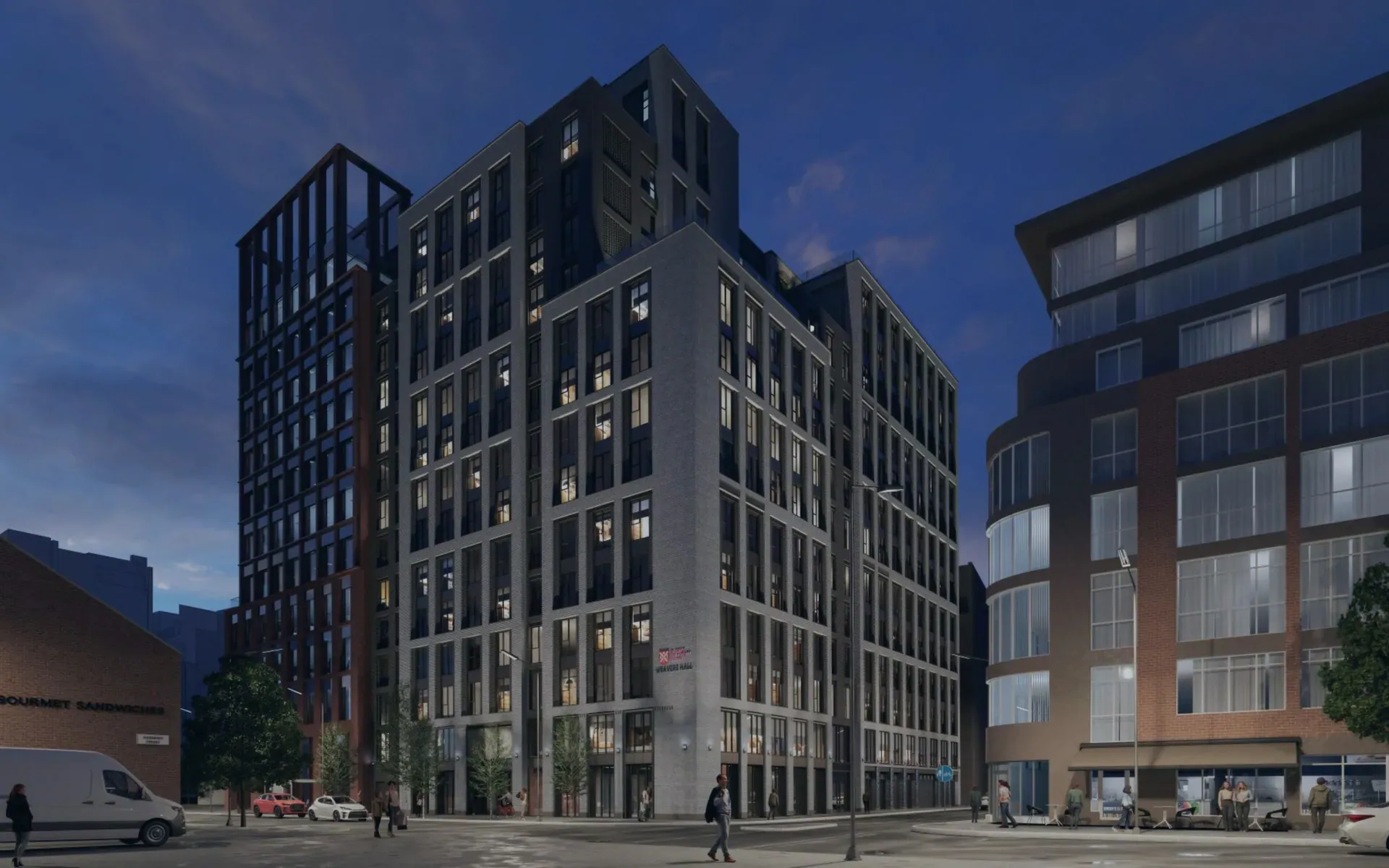
That resolution matters most where the heat has nowhere to go. Glazed and single-aspect units, dense urban sites with little night purge, naturally ventilated schools and deep-plan buildings: the apartments, student accommodation and classrooms where summer comfort is decided by shading, glazing ratio and the ventilation strategy. It is also the formal answer to an overheating condition. A planning or building control requirement is met with a TM59 or TM52 dynamic model and a documented pass, not a static figure. This is everyday work on residential at scale and on dense, single-aspect student-accommodation schemes, the same building type as our certified Passivhaus work at Weavers Hall in Belfast.
CIBSE TM59 for domestic overheating analysis, CIBSE TM52 for non-domestic buildings such as schools and offices, and Approved Document Part O for new homes in England. We model to whichever framework the project and the jurisdiction call for, and report a clear pass or fail against it.
Glazed or single-aspect dwellings, dense urban sites with limited night purge, naturally ventilated schemes that lean on openable windows, deep-plan layouts, and anywhere a planning or building control overheating risk assessment is required. If a room is hard to shade or hard to ventilate, it needs the hourly model.
The questions a static model leaves open.
Overheating is a problem of specific rooms on specific days, so we frame the work as the questions the design team actually needs answered before the facade is fixed.
Will these apartments overheat? Which units, which rooms, and on how many hours of the year, read room by room rather than as a building average.
Does the shading actually work? We test the proposed brise-soleil, reveals, balconies and external blinds in the model and report the temperature each one buys back.
Does the ventilation strategy hold in a heatwave? Whether night purge and the MVHR summer bypass keep bedrooms inside the limit across a hot week, not just on an average day.
Is it a TM59 pass or fail, and by how much? A documented result against the relevant criteria, with the failing rooms named and the margin quantified, ready for planning or building control.
Dynamic simulation sits alongside the rest of the building physics. Pair it with daylight and glare modelling when bigger glazing has to earn its place, bring it in early when we are your Passivhaus designer so comfort is solved in the model, and see how it lands on the buildings that need it most in our student accommodation work.
Method: how we work.
MethodWe build the dynamic thermal model from the geometry, the construction build-ups and the weather file for the site. Every thermal zone is defined, the fabric carries its real U-values and thermal mass, and the model runs on an hourly weather year for the location rather than one design day. Get this wrong and every result after it is wrong, so it is built and checked before anything is read from it.
We apply the occupancy, internal gains and ventilation profiles the assessment defines: for domestic work the fixed TM59 profiles, so the result is comparable and defensible rather than a matter of opinion. The model then runs free-running, with no mechanical cooling, across the whole year. That is how you read the building’s true summer behaviour as designed, before any cooling is allowed to hide it.
Results are tested against the relevant criteria: the TM59 or TM52 adaptive comfort and bedroom-temperature limits for residential and non-domestic work, or the Part O criteria for new homes in England. We name the rooms that fail and the margin by which they fail. The conversation becomes three specific spaces and a number, not a vague worry hanging over the whole scheme.
For the failing rooms we test the fixes in the model: external shading, glazing ratio and g-value, and the ventilation strategy including night purge and summer bypass. We iterate until every room passes, then report the compliant solution with the evidence behind it, ready for planning or building control. Moving a brise-soleil in the model costs an afternoon. Moving it on a built facade costs a great deal more.
Run a quick overheating screen.
A first-pass overheating risk screen against CIBSE TM59 and Part O. It finds the rooms and facades that warrant a full dynamic thermal simulation, so you spend the budget where the risk is.
Common questions.
FAQWhat is the difference between CIBSE TM59 and CIBSE TM52?
Both are CIBSE overheating analysis methods run by dynamic thermal simulation, and both rest on the same adaptive comfort criteria set out in TM52. The difference is scope. TM52 is the general method for non-domestic, naturally ventilated buildings: offices, schools, public buildings. TM59 is the dedicated domestic method, built on top of TM52, with fixed occupancy, internal gains and ventilation profiles so every dwelling is assessed on the same defined basis. Run TM59 for an apartment scheme or student accommodation. Run TM52 for a school or an office. The point of both is to test the building against the hours it will actually be hot, not against an annual average.
What is Part O overheating and does it apply in Ireland?
Approved Document Part O is the overheating regulation for new residential buildings in England, in force since June 2022. It gives two routes. The simplified method caps glazing area and sets minimum opening sizes. The dynamic route uses a CIBSE TM59 overheating analysis for schemes that cannot meet the simplified limits, which is most dense or highly glazed urban housing. Part O does not apply in Ireland or in the rest of the UK, but Irish planning authorities increasingly ask for an overheating risk assessment, and TM59 and TM52 are the recognised way to provide one. Summer comfort obeys the same physics on either side of the border.
Can a Passivhaus or Passive House overheat?
Yes, and underestimating that risk is a common mistake. A Passive House is heavily insulated and airtight, so once heat is in the building, from solar gain through glazing, from occupants or from equipment, it is slow to leave. PHPP carries a static frequency-of-overheating figure that is a genuinely useful early warning, but it is an annual average and does not resolve the hourly peak in one room on a hot week in July. A glazed, single-aspect or south-facing flat can sit well inside the PHPP energy target and still fail TM59 on comfort. Dynamic thermal simulation is how that gap is found and closed, usually through external shading, glazing ratio and a credible ventilation strategy, while it is still a line on a drawing.
When do I need full dynamic simulation rather than the quick screen?
The quick screen is a first pass. It flags the rooms and facades most exposed to overheating so you know where the pressure sits before committing to a full study. You need a full dynamic thermal simulation when a planning condition or building control asks for a formal overheating risk assessment, when you are demonstrating Part O through the TM59 dynamic route, or when the screen shows that glazed, single-aspect or high-occupancy spaces are close to or over the limit. For dense urban apartments, student accommodation and naturally ventilated schools, the hour-by-hour model is usually the only way to demonstrate compliance and the only way to size the fix.
Start with the screen.
Run the overheating quick check to find the rooms that warrant a full TM59 study. Or talk to us directly if you already have a planning or Part O overheating condition to answer.