Passivhaus for Scotland’s new standards.
A net-zero target ahead of the rest of the UK, a ban on fossil heat in new homes, and a Passivhaus-equivalent standard on the way. We design to where Scotland’s rules are going.
Scotland has moved faster than the rest of the UK on low-energy building: a 2045 net-zero target, a ban on direct-emission heating in new buildings, and a commitment in law to a Scottish equivalent to the Passivhaus standard. If you are planning a pipeline of homes here, the designs need to be ready for that. Passivhaus already meets it.
The Scottish regime, and where Passivhaus fits.
RegulationNew Build Heat Standard
Since April 2024, new buildings must use zero direct-emissions heating, no gas or oil boilers. A Passivhaus needs so little heat that a small heat pump comfortably covers it, cutting both plant cost and running cost.
Section 6, Energy
Scotland’s energy standards were uplifted sharply in 2022. Scottish building standards differ from those in England and Wales, and we design to Section 6 directly.
Scottish Passivhaus equivalent
Scotland is bringing in a Passivhaus-equivalent standard for new homes, due from 31 March 2028. It plans to retire SAP and adopt PHPP, the model we build every project in, as the route to compliance. Designing to Passivhaus now meets it ahead of time.
Net zero by 2045
Five years ahead of the UK. Reaching it for new homes means very low operational energy and zero-emission heat: the fabric-first combination Passivhaus is built around.
A colder climate makes the saving bigger.
The further north and the longer the heating season, the wider the gap between a standard build and a Passivhaus, and the bigger the saving for the occupant. We model every Scottish project against its local climate dataset in PHPP, so the design answers the conditions on the actual site, from the central belt to the north-east coast.
It also makes the comfort and fuel-poverty case sharper: warm, draught-free, well-ventilated homes that cost little to heat matter most where winters are hardest.
- Longer heating season, larger absolute energy saving
- Zero-emission heat is easy when demand is tiny
- Stronger fuel-poverty and comfort outcomes
- Ahead of the Scottish Passivhaus-equivalent standard
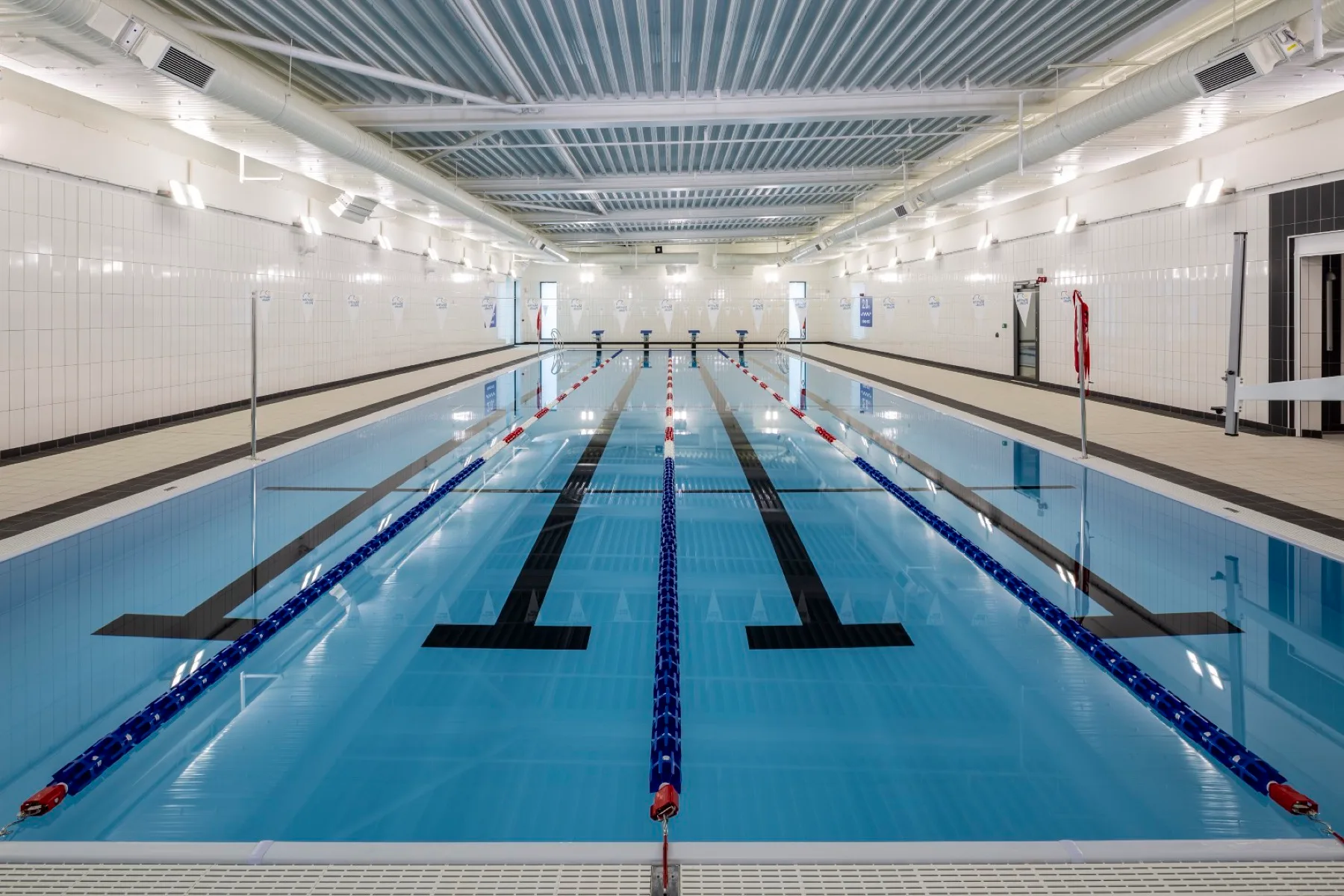
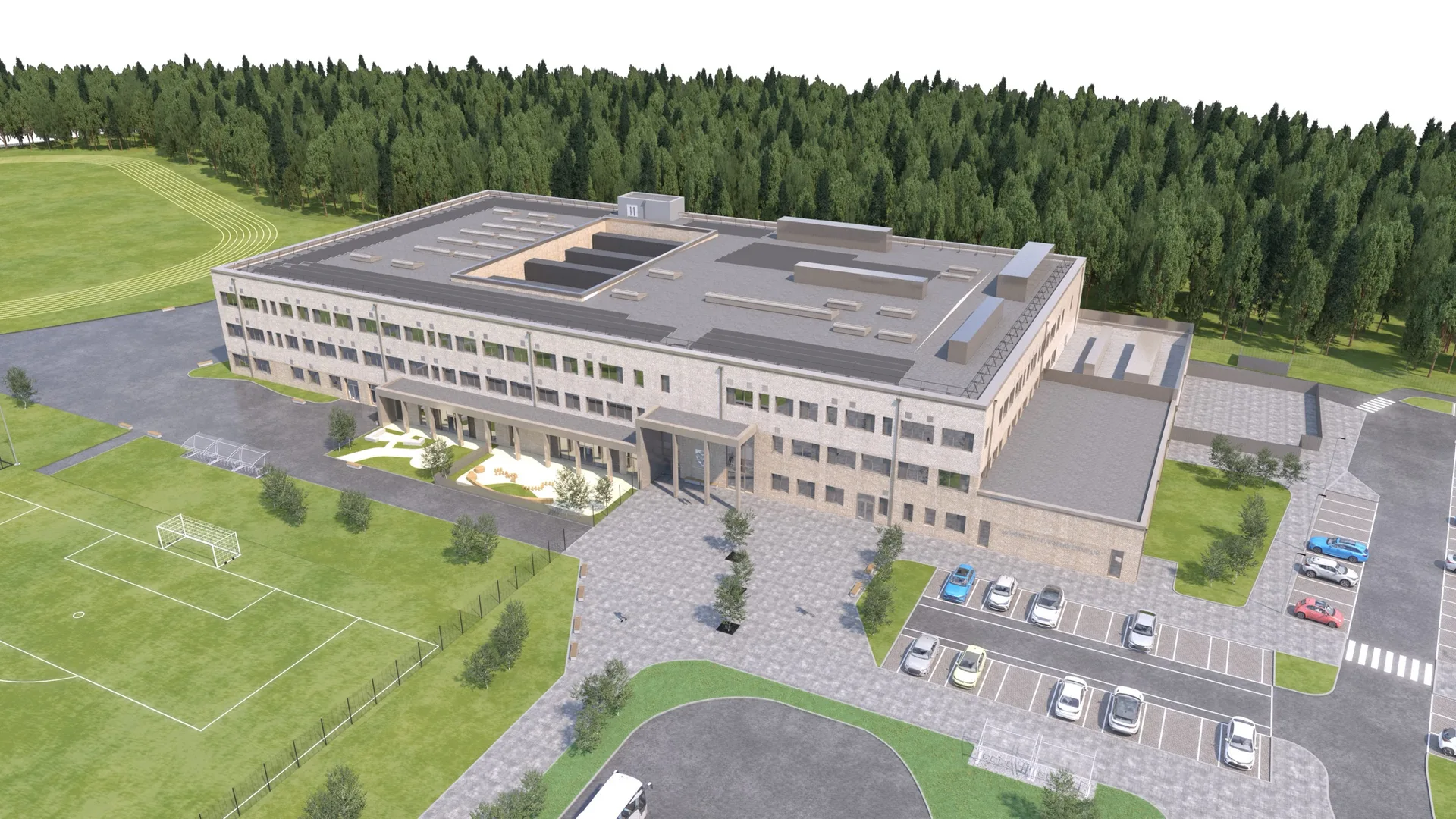
Monifieth Learning Campus.
A school for 1,200 pupils with a 25-metre pool, 13,795 m² at £66.5 million, in the final stages of Passivhaus Classic certification and the first large-scale Passive House building in Angus. We are the certifiers. The pool hall sits outside the usual rules for heat and humidity, so the Passivhaus Institut in Darmstadt joined as co-certifier for that element under a simplified method, and the campus needed a bespoke Primary Energy Renewable benchmark from the Institut rather than a standard figure. The main building tested at 0.44 air changes per hour at 50 Pa, inside the 0.6 limit. High performance does not stop at the easy building types. Across Scotland we work as both Passivhaus designer and independent certifier.
Passivhaus in Scotland, answered.
FAQIs Passivhaus becoming mandatory in Scotland?
It is on its way. Scotland has committed to a Scottish equivalent to the Passivhaus standard for new-build homes, with a mandatory date of 31 March 2028, and it plans to retire SAP and adopt PHPP, the Passive House model, as the route to compliance. The New Build Heat Standard already applies. So while the full standard is still being brought in, the direction is fixed: designing to Passivhaus now puts a scheme ahead of where Scottish regulation is heading rather than behind it.
What is the New Build Heat Standard?
Since 1 April 2024, new buildings in Scotland (those applying for a building warrant from that date) must use zero direct-emissions heating: no gas or oil boilers, with heat pumps and heat networks the usual routes. A Passivhaus suits this well. A building with very low heat demand needs only a small heat pump, which cuts both the cost of the plant and the running cost for the occupant.
Does Scotland’s climate change the case for Passivhaus?
It makes the case stronger. A colder, longer heating season means the gap between a leaky building and a Passivhaus is larger in Scotland than further south, so the energy saving and the comfort gain are both greater, and there is more weight behind the fuel-poverty argument. We model every project against the local Scottish climate data in PHPP, so the design is tuned to the conditions on site.
Has Mosart delivered Passivhaus in Scotland?
Yes. We are the Passivhaus certifiers on Monifieth Learning Campus in Angus, a £66.5 million school for 1,200 pupils with a 25-metre pool, in the final stages of Passivhaus Classic certification and the first large-scale Passive House building in the county. Across Ireland and Great Britain we work as both Passive House designers and certifiers. Scottish building standards differ from those in England and Wales, so a Scottish scheme is run under Section 6 (Energy) of the Scottish standards from the start.
How does this fit Scotland’s net-zero target?
Scotland’s statutory net-zero target is 2045, ahead of the UK’s 2050. Reaching it for new homes means cutting operational energy as far as it will go and removing fossil heat, which is the fabric-first, zero-emission-heat combination Passivhaus is built around. The target arrives sooner in Scotland than anywhere else in the UK or Ireland, and building to the standard now is the surest way to be ready for it.
Can you prove the buildings perform once occupied?
Yes. Our Pulse service monitors completed buildings in use, measuring energy, temperature, humidity and air quality continuously. For social landlords and registered social landlords in Scotland that means evidence of comfort and low running cost, and early warning on damp, ventilation and overheating, rather than waiting for a complaint.
Building in Scotland?
Bring us in at feasibility and your scheme is designed for the New Build Heat Standard, Section 6 and the coming Passivhaus-equivalent standard from the first model.