Get the physics right before a line is drawn.
Architects who think in building science. Engineers who value design.
The decisions that govern a building's energy performance for its entire lifetime are made in the first few weeks of design. Orientation, massing, form factor and glazing ratios: these are cheap to change at the feasibility stage and almost impossible to change after planning. We run a live PHPP energy model from the first sketch, so the performance target is set before the geometry is fixed.
What feasibility and masterplanning deliver.
What it isA Passivhaus feasibility study is an early-stage energy and cost assessment: can this brief, on this site, in this orientation, meet the Passivhaus standard? The PHI Passivhaus Classic standard requires a specific space-heating demand of no more than 15 kWh/m²a and an airtightness of 0.6 ACH at 50 Pa. These are absolute thresholds, not aspirations, and they are tested against a whole-building model in PHPP.
We build that PHPP model at the feasibility stage, before the structural system is chosen or the facade is specified. The model answers the questions that matter at this stage: which orientations work? What form factor does the massing produce? How much glazing can face west before overheating becomes a problem? What envelope specification will be needed, and at roughly what cost?
For masterplanning, the feasibility work scales up: we set the typology mix, block orientations and energy targets for every parcel so that individual buildings can be certified as they are completed. The masterplan rules are the contract between the layout and the standard.
Specific space-heating demand: max 15 kWh/m²a. Airtightness: max 0.6 ACH at 50 Pa. Primary energy renewable (PER): max 60 kWh/m²a for Passivhaus Classic. These are tested in PHPP with the as-designed geometry. We set them as targets at the feasibility stage, not as checks after design development.
A change in building orientation at the feasibility stage costs nothing. The same change after planning approval costs a planning application. After the structure is fixed, it may be impossible. Every week of delay in setting the energy target increases the cost of meeting it. We bring PHPP into the room at the first design meeting.
How we work.
MethodWe review the site constraints, planning context, client brief and programme. We identify the orientation options, any overshadowing, the likely planning massing envelope, and the target standard. This produces a written scope for the feasibility study and a first assessment of the typology mix that will best achieve the energy target.
We build early massing options and calculate the form factor for each: external envelope area divided by treated floor area. We test the energy consequences of the proposed density, block heights and building depths in a parametric PHPP model. The output is a comparison of massing options against the energy target, showing the envelope specification each requires.
For each massing option, we vary orientation and glazing ratios in PHPP and map the effect on space-heating demand and summer overheating risk. The result is a matrix of options with indicative U-values, window specifications and heat-recovery efficiencies, so the design team knows what the preferred layout will require before the planning application is prepared.
For whole-scheme masterplanning, we translate the feasibility outputs into a set of energy rules for each plot: minimum envelope performance, maximum glazing ratios, airtightness targets and any renewables requirement. These are written into the design brief for each building parcel and form the basis for Passivhaus certification as individual buildings are completed.
In practice: Seven Mills.
Evidence 5,500-home new town. Passivhaus from day one.
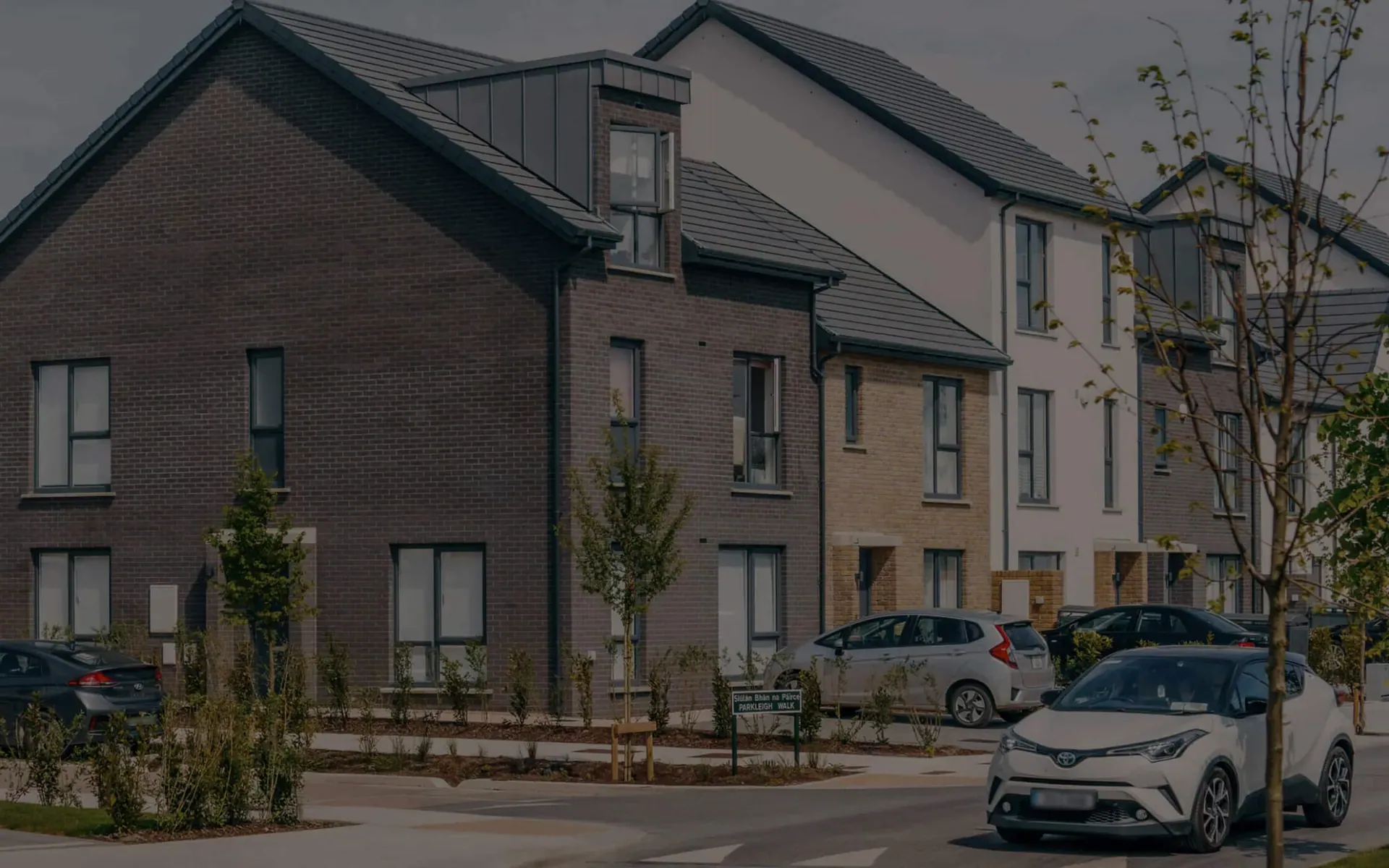
Seven Mills is a 5,500-home new town being delivered by Cairn Homes on a major site in Clondalkin, Dublin. Mosart is the Passivhaus certifier for the scheme. The scale of the project makes the masterplanning phase decisive: the typology mix, block orientations and plot-level energy rules must be set correctly before planning is approved, because the geometry of a new town is not easy to revise after consent.
The masterplanning work sets the Passivhaus targets for each parcel and the typology rules each building must meet. Individual buildings are certified to PHI Passivhaus Classic standard as they are completed. Seven Mills is one of the largest Passivhaus residential masterplans in Ireland.
See the Seven Mills case study →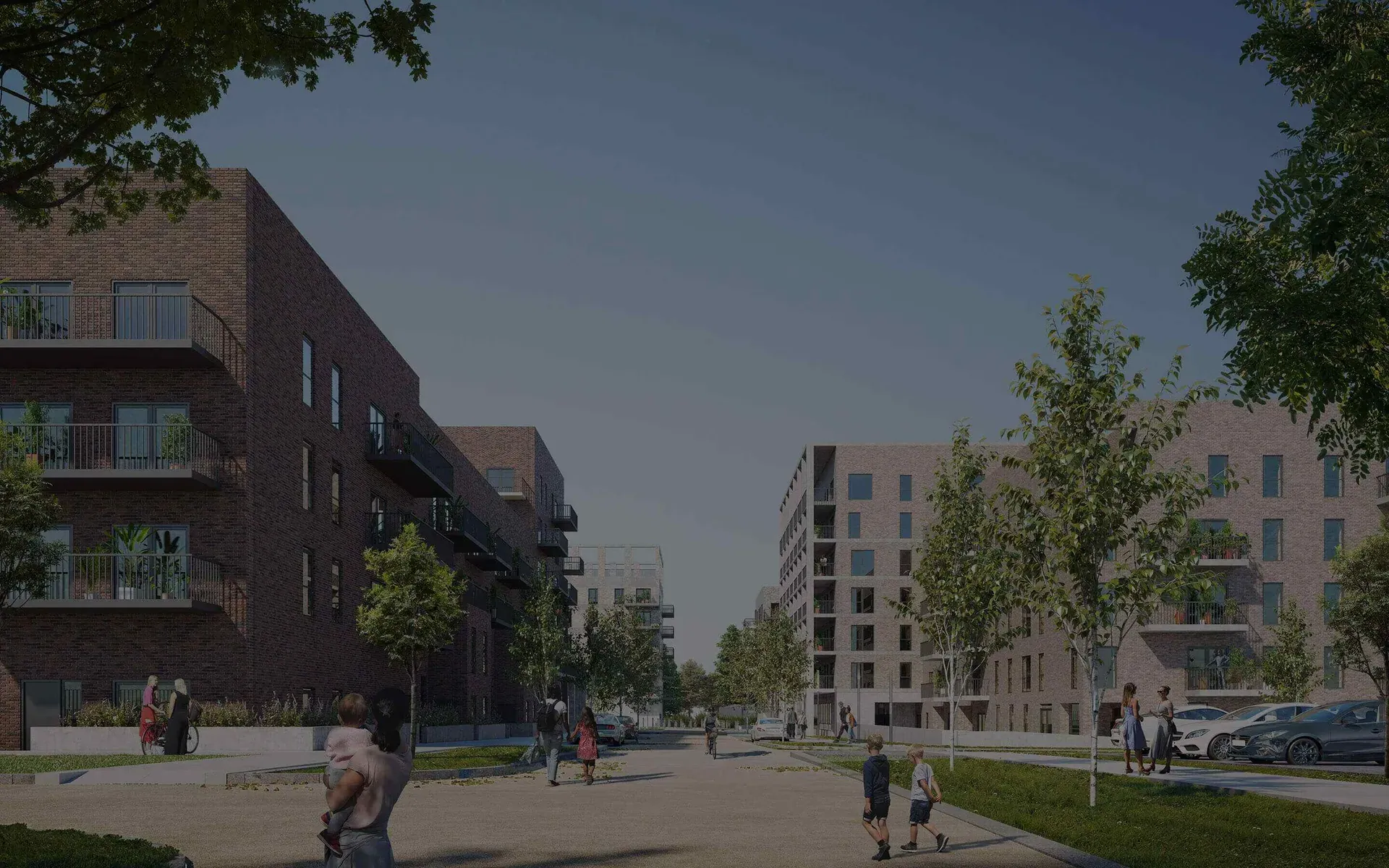
550+ Passivhaus homes. Social housing at urban scale.
At Shanganagh Castle in Dún Laoghaire, Mosart led the Passivhaus design for a 550+ home social housing masterplan. The feasibility work established the form-factor targets for each block type and the orientation rules that would allow the scheme to certify within the planning massing. The scheme is one of the largest Passivhaus social housing projects in Ireland.
See the Shanganagh Castle case study →Common questions.
FAQWhat does a Passivhaus feasibility study cover?
A Passivhaus feasibility study assesses whether the site, brief and programme can achieve the target standard: 15 kWh/m²a specific space-heating demand and 0.6 ACH airtightness at 50 Pa. We model form factor, orientation, glazing ratios and shading for the proposed massing and produce an early PHPP run that shows whether the target is achievable and what it will cost in terms of envelope specification. This stage is the cheapest point at which to change a building.
Why does building orientation matter for Passivhaus?
Passive solar gain from south-facing glazing can reduce space-heating demand significantly, but glazing that faces east or west provides little useful gain and increases summer overheating risk. In a dense masterplan where not every dwelling can face south, the PHPP model shows which orientations meet the standard on envelope alone and which need additional insulation to compensate. We test the energy consequences of the masterplan geometry before the urban design is fixed, so the layout works with the physics rather than against it.
Can a whole new town be masterplanned to Passivhaus?
Yes. At Seven Mills in Clondalkin, Dublin, Mosart is the Passivhaus certifier for a 5,500-home new town being delivered by Cairn Homes. The masterplanning phase establishes the building typologies, block orientations and energy targets that each parcel must meet. Individual buildings are then certified as they are completed. The scale requires the masterplan to set the rules correctly from the start, because the typology mix and street orientation are very difficult to change once planning is approved.
What is form factor and why does it affect Passivhaus performance?
Form factor is the ratio of the external surface area of the thermal envelope to the treated floor area it encloses. A compact building with a low form factor has less surface area per square metre of floor to lose heat through, so it is easier and cheaper to achieve the Passivhaus standard. We calculate form factor at the feasibility stage and use it to set the indicative U-values, window specification and ventilation heat-recovery efficiency the project will need.
At what stage should a Passivhaus feasibility study be commissioned?
As early as possible: ideally before or alongside site acquisition. The feasibility study informs the site-specific premium for a Passivhaus specification, the optimal typology mix and the layout geometry. Commissioning it after planning approval limits the options and usually increases cost. Even a short feasibility study on a brief and site plan gives a client the information they need to negotiate the brief and confirm the budget before RIAI Stage 1 begins.
Commission a feasibility study.
Tell us the site, the brief and the target standard. We will tell you what the geometry and programme require, and what it will take to get the building to Passivhaus.