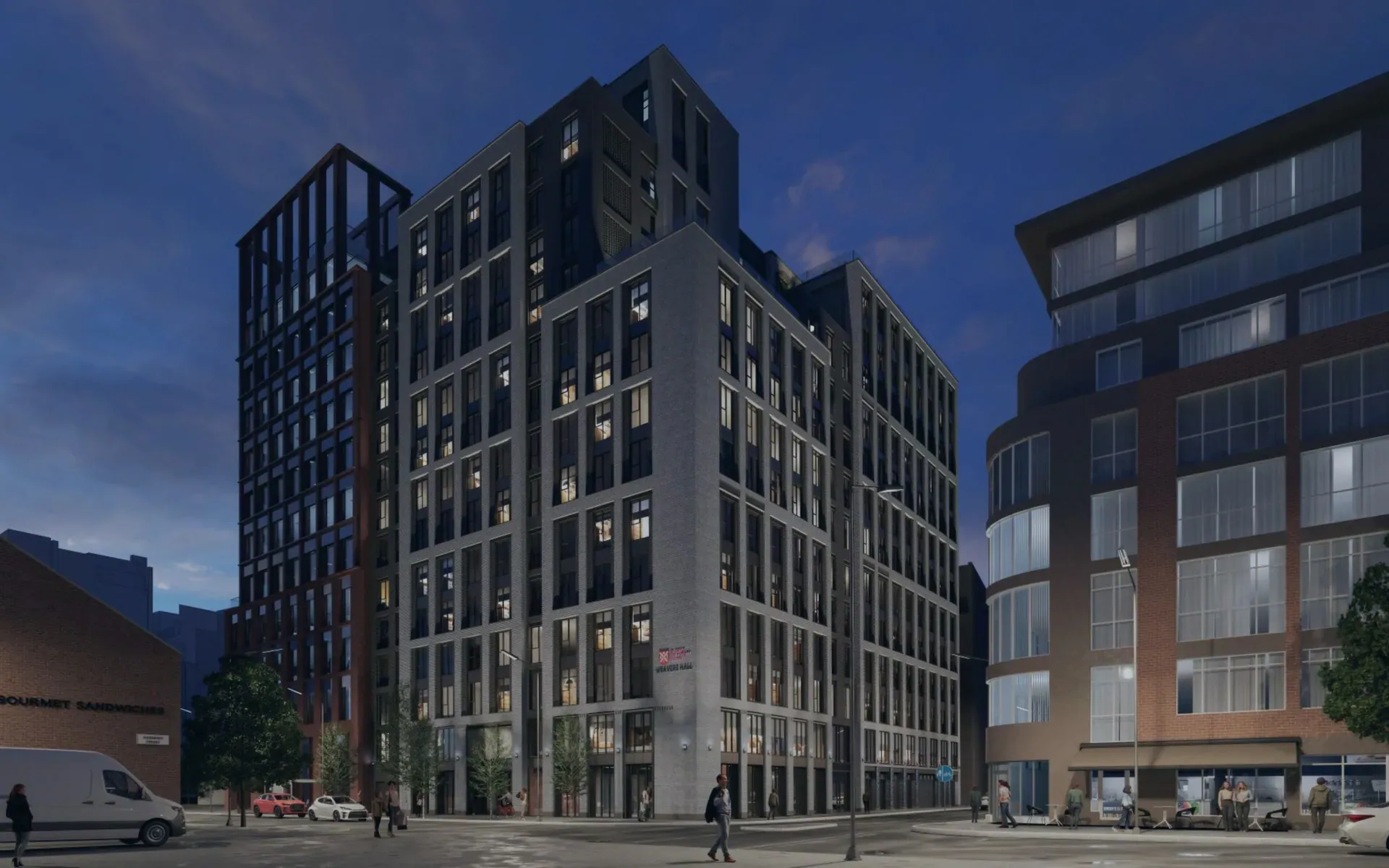
Every room, every floor, every student.
Passivhaus for purpose-built student accommodation at scale.
Student accommodation puts building physics problems that standard design tools tend to underestimate all in one place: dense occupation, high internal heat gains, mixed orientations, all-inclusive energy bills and occupants who will not open a window in January. A standard envelope struggles with all of them. Passivhaus handles each from first principles. We have certified the largest Passivhaus student buildings in the UK and on the island of Ireland, and are working on schemes totalling around 7,500 student bed spaces across Belfast, London and Manchester.
Why Passivhaus for student accommodation.
The argumentDensity is the hard case
Student accommodation is among the most densely occupied building types there is. Each room is a single occupant generating heat, moisture and CO2 in a small, largely sealed space, with significant internal gains from occupants, computers and devices. In a standard building that means mechanical cooling or persistent summer overheating, and a ventilation strategy that cannot reliably deliver fresh air in winter when windows are shut. Passivhaus resolves it in the envelope rather than with added plant: controlled ventilation rates, tested airtightness and a thermal envelope specified to manage the internal gains rather than fight them.
Consistent comfort, regardless of floor or orientation
In a large PBSA scheme, south-facing rooms overheat and north-facing rooms are cold. Upper floors run warmer than lower floors. Rooms adjacent to plant rooms are noisier. These are the complaints that drive negative reviews and void rates. Passivhaus design addresses orientation and solar gain through envelope geometry, shading and glazing specification modelled in PHPP from the earliest design stage. MVHR delivers the same air quality to each room, on the top floor or the ground floor. Comfort does not depend on which room a student is allocated.
Ventilation a dense building can rely on
Trickle ventilation and openable windows are not adequate ventilation strategies for student accommodation at scale. Occupants do not consistently open windows, particularly in winter. Windows left open compromise airtightness and the heating strategy. Shared ducts in standard MVHR systems carry cross-contamination risk between rooms. Passivhaus-grade MVHR with room-level supply and extract delivers measured, filtered, heat-recovered ventilation independently of occupant behaviour, window position or season. CO2 levels stay low, humidity is controlled and the condensation and mould risk that generates the most serious complaints in student housing is eliminated by design.
Overheating designed out at the envelope
CIBSE TM52 and TM59 overheating assessments are now required for residential buildings in the UK, and the criteria are particularly demanding for dense, high-occupancy buildings. Part O in England sets a notional limit on solar gain. Student accommodation schemes that address overheating through the envelope, with optimised glazing ratios, external shading and thermal mass, pass these assessments without the cost of supplementary mechanical cooling. Buildings that do not address it in the envelope must install cooling plant, with the capital cost, running cost and maintenance that brings. With Passivhaus, overheating compliance comes out of the design itself.
Very low running cost in an all-inclusive model
Most PBSA schemes are let on all-inclusive rents in which the operator carries the energy cost. A Passivhaus building with a maximum space heating demand of 15 kWh per square metre per year consumes dramatically less energy than a standard building at the same density, and the saving compounds across a portfolio of buildings over a 25-year holding period. At the scale of a 1,000-bed scheme, the annual energy saving compared to a building that just clears the building regulations threshold is material to the operating account. Operators who build to Passivhaus are better insulated against energy price volatility and better positioned for ESG disclosure to investors.
Reputational and ESG value for universities and operators
Universities compete on sustainability credentials as much as research rankings. A Passivhaus-certified student building is a credible, independently verified sustainability claim. It can be cited in GRESB submissions, university league table submissions, planning applications, and lender ESG covenants. It provides a live case study for built environment faculties. For private PBSA operators, Passivhaus certification differentiates the product in a crowded market and supports the ESG disclosures increasingly required by institutional investors and green financing covenants.
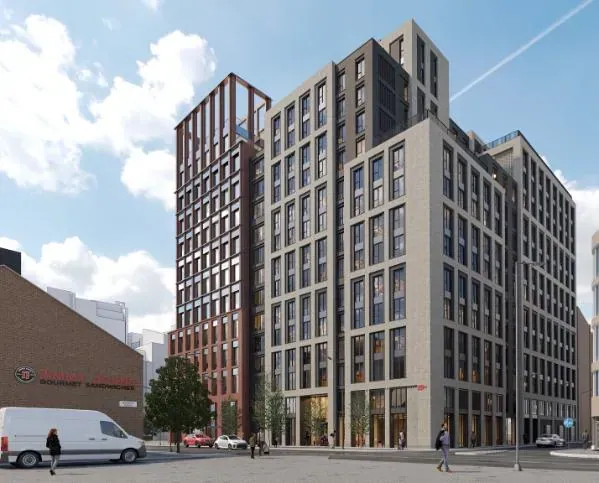
Certified at scale.
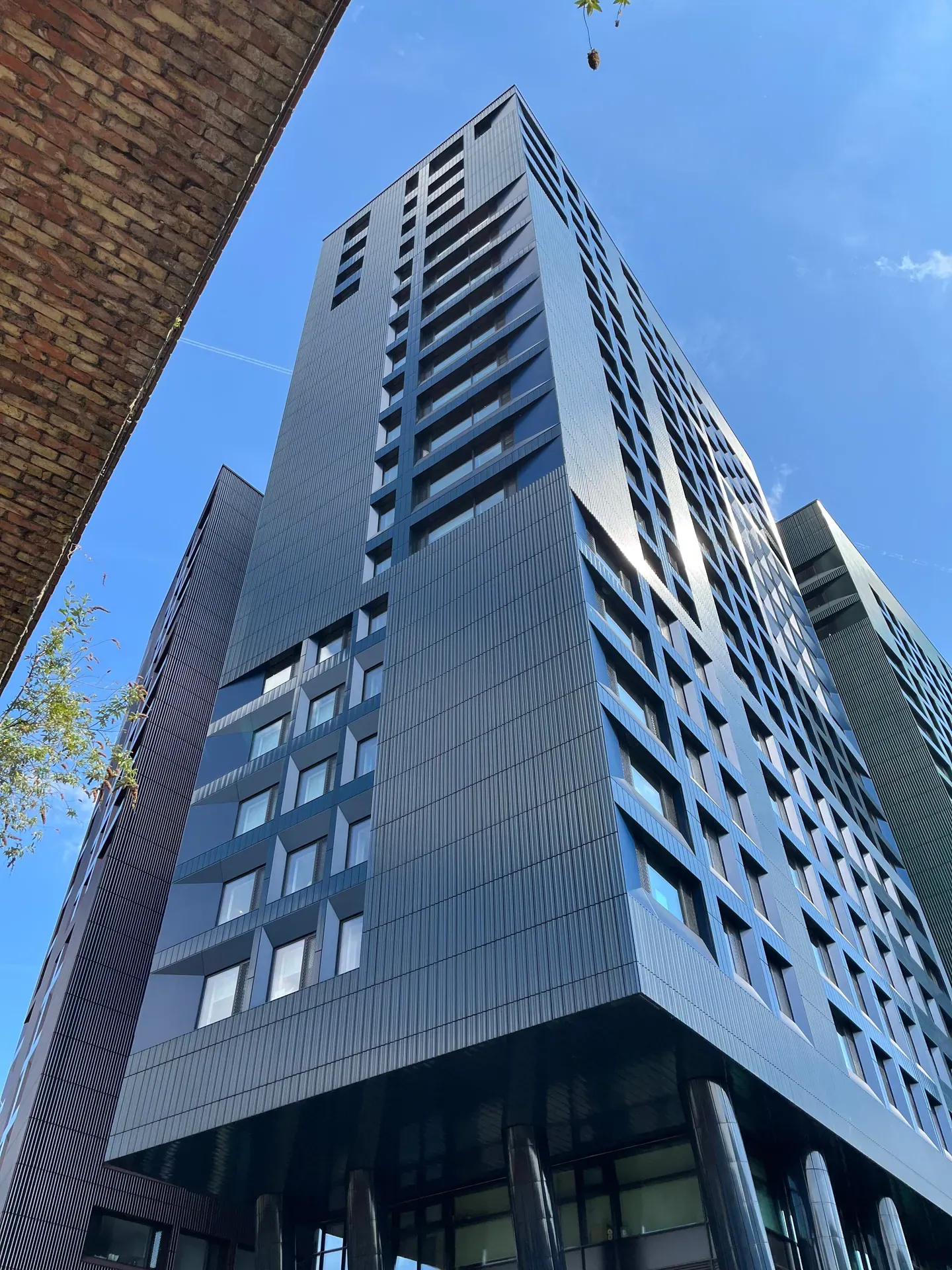
Urbanest Battersea
Student accommodation projects.
03 / All projects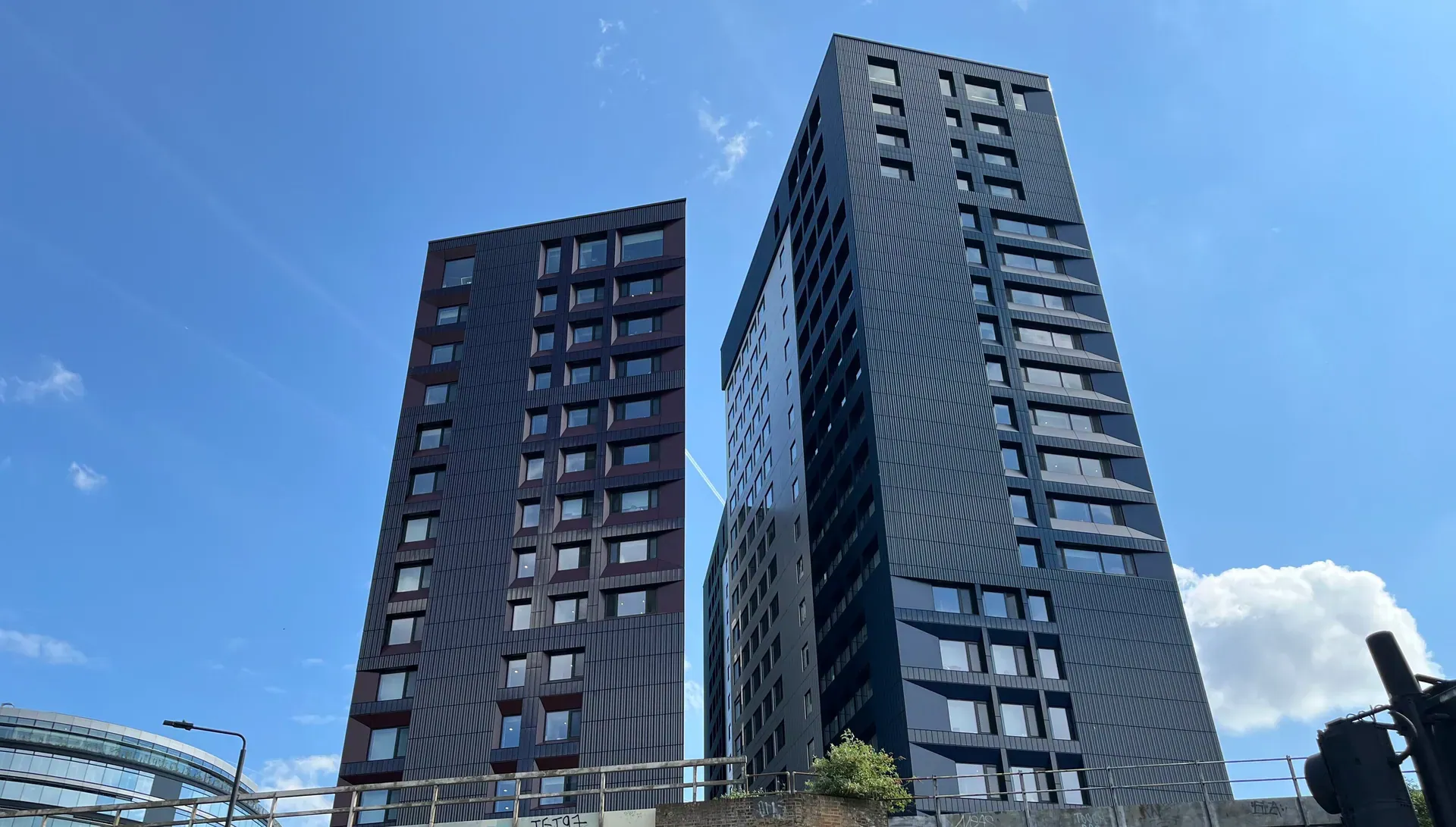
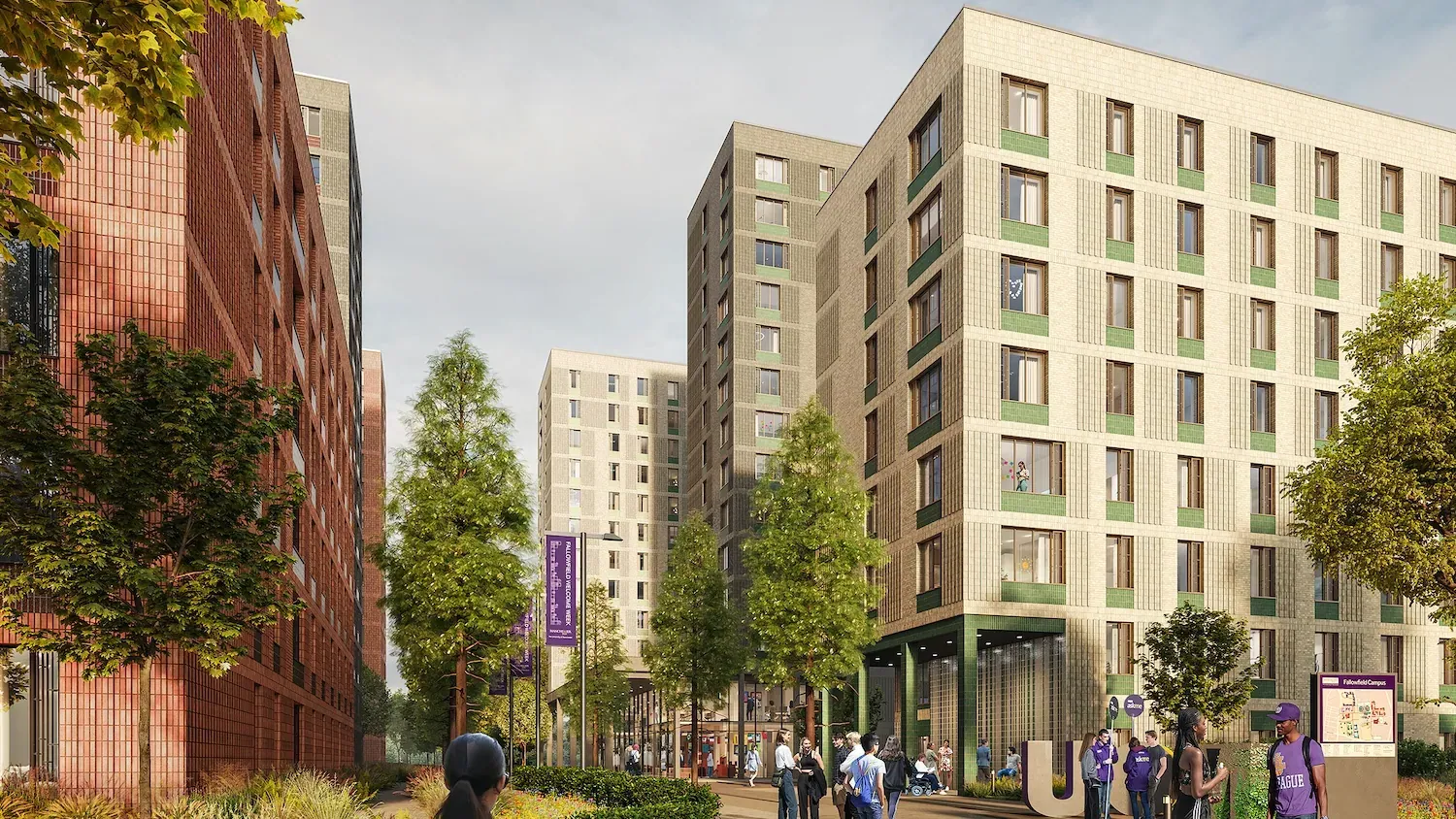
Modelled for density, not floor area alone.
PHPP for student accommodation cannot be run with typical occupancy assumptions. We model the actual internal heat gains from dense occupation, the ventilation loads that MVHR must handle across hundreds of rooms, and the overheating risk that comes from the combination of high occupancy, high glazing and limited shading.
We have worked on PBSA from low-rise courtyard schemes to 46-storey towers. The standard is the same at both ends. What changes is the engineering strategy: facade zoning, MVHR phasing, airtightness testing protocols and the certification evidence pack that demonstrates compliance to PHI.
Common questions.
FAQWhy is overheating a particular risk in student accommodation?
Student rooms are highly occupied, often south-facing in part, and generate significant internal heat from occupants, laptops and devices. Dense buildings with high window-to-wall ratios can overheat severely in summer and shoulder seasons, even in the UK and Ireland climates. Passivhaus addresses overheating from the envelope out: glazing ratios and solar shading are modelled in PHPP from feasibility, MVHR provides controlled ventilation independent of window opening, and the thermal mass of a high-performance envelope buffers against temperature spikes. Every scheme is assessed against CIBSE TM52 or TM59 criteria, and where overheating risk is identified, it is designed out in the envelope rather than managed with additional cooling plant.
What does Passivhaus mean for the running cost of a PBSA scheme?
Student accommodation operators carry the energy cost for common areas, corridors and frequently for the rooms themselves under all-inclusive rental models. A Passivhaus building requires dramatically less heating energy than a standard building: the standard limits space heating demand to 15 kWh per square metre per year. At the density and scale of a PBSA scheme, this translates into a material reduction in the annual energy bill and a corresponding improvement in net operating income. It also reduces exposure to energy price volatility, which has become a significant risk for operators running long fixed-rent agreements.
Can Passivhaus be achieved on high-rise student accommodation towers?
Yes. Mosart certified Urbanest Battersea in London, an 853-bed Passivhaus development across three buildings in Nine Elms, which was the largest certified Passivhaus in the UK at completion in 2024. Mosart is also Passivhaus designer for 2 Trafalgar Way in Canary Wharf, targeting certification across three towers of 28, 36 and 46 storeys delivering 1,672 student bedrooms. At height, the engineering challenge shifts to wind pressure effects on airtightness, facade system continuity and MVHR zoning, all of which are addressed in the PHPP model and the building physics strategy from the start of design.
How does indoor air quality in Passivhaus accommodation affect student wellbeing?
Elevated CO2 from occupants in poorly ventilated rooms is associated with fatigue, reduced concentration and increased illness. In a standard student bedroom with a closed window in winter, CO2 can exceed 2,000 ppm within an hour of occupation. MVHR in a Passivhaus building delivers a continuous supply of fresh filtered air to every room regardless of weather or window position, keeping CO2 levels consistently below 1,000 ppm. The filtered supply also removes outdoor pollutants and allergens, which is particularly significant for students with respiratory conditions. Universities and operators increasingly cite air quality as a measurable differentiator for lettings and retention.
What ESG and reporting benefits does Passivhaus certification provide for universities and operators?
Passivhaus certification provides a third-party verified, internationally recognised performance credential that can be cited directly in GRESB submissions, university sustainability reports, and ESG disclosures to lenders and investors. It demonstrates verified as-built performance, which is what credible ESG reporting requires. For universities, a certified Passivhaus building also has pedagogical value: it demonstrates that the institution builds as it teaches and provides a live case study for built environment faculties.
Talk to us about your PBSA scheme.
Tell us the bed count, height and programme. We will tell you what Passivhaus requires at that scale and what the business case looks like across the full holding period.