The business case, in plain numbers.
Lower energy, comfort people can feel, a regulation runway already heading this way, and an independent certificate that proves the building does what the brochure says.
The cost question, first.
CostThe honest answer is that it depends on who is building it. The 4 to 8 percent premium people quote comes mostly from one-off houses built by a team doing their first Passivhaus, or from projects where the standard was added late. It is real, but it is a learning curve, not a fixed cost. The Passivhaus Trust estimates that around 60 percent of any premium can be designed out, and Exeter City Council, which has built Passivhaus council housing for over a decade, has taken its own premium from roughly 20 percent on its first scheme to close to cost-neutral now.
That matches what we see in Ireland. On schemes delivered at scale, with contractors who have built to the standard before, a supply chain that is already in place, and the junctions and details resolved in advance, the uplift lands close to negligible. Most of the saving is made early and costs nothing: a compact form, a sensible amount of glazing, and a building that is simple to construct. Simplicity is what makes Passivhaus economical, and it is most of what makes the standard work.
When the decision is made matters most. Bring the standard in at feasibility, while orientation, built form and glazing ratios are still open, and much of the performance is bought for nothing. Bolt it on after planning and it is paid for twice, in thicker spec and abortive redesign. The cost then falls again with each repeat, the details reused and the airtightness sequence already known, which is why the housebuilders moving to Passivhaus here are doing it across a whole pipeline rather than one project at a time.
A feasibility study prices the standard for your site and brief. Our thermal bridge estimator gives an indicative figure on real rates, confirmed by a certifier within one working day.
A better building, and you can feel the difference.
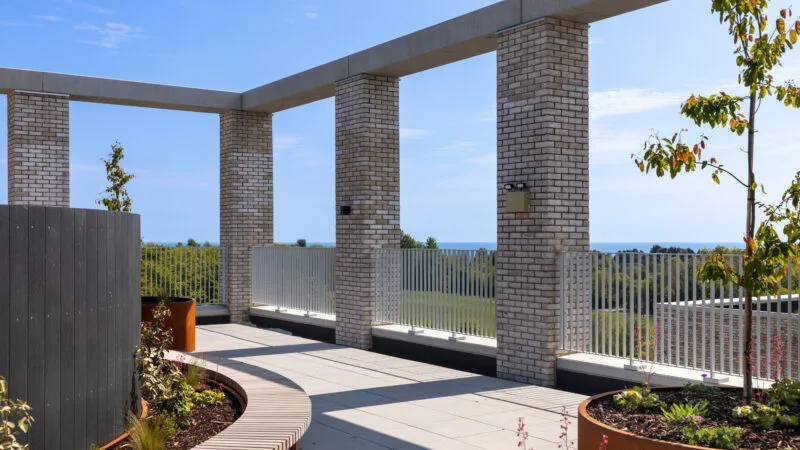
Stable temperatures in every room, filtered fresh air without draughts, quiet, and energy bills that stay small when prices do not. Space-heating demand is capped at 15 kWh per square metre a year, a fraction of a standard build.
That product difference converts. Lower running costs are now a line in sales and letting material across both markets. Operators of build-to-rent and student schemes see it operationally: fewer comfort complaints, fewer damp and mould calls, cleaner ESG reporting. And because performance is certified rather than claimed, the marketing line survives due diligence.
- Warm, even temperatures, room to room
- Continuous filtered fresh air, no draughts
- Bills that hold steady when energy prices move
The risk most schemes carry.
RiskThe quiet risk in low-energy construction is the performance gap: a building that models well, markets well, and then underdelivers in use. The gap usually opens on site, in junctions, airtightness and commissioning, and it surfaces later as complaints, voids and reputational cost.
Passivhaus is the only mainstream standard built to close that gap. The model is independently checked, the airtightness is measured with a blower-door test before handover, and certification fails if the building does. Add in-use monitoring and the loop is closed.
We monitor completed schemes in use, hundreds of homes live today. The conservative pattern is at least 50 percent less energy than a standard build, and the data feeds back into the next scheme.
The regulation runway.
ComplianceBoth jurisdictions are converging on this standard. The rules will reach it either way. The only question is whether your designs are ahead of them or chasing them.
Ireland
Part L and nZEB keep tightening, and public bodies, councils and the Land Development Agency specify Passivhaus directly.
England
The Future Homes Standard tightens carbon and heating for new homes, and Part O already requires overheating to be designed out.
Scotland
A Passivhaus-equivalent standard for new homes, with PHPP, the model we build every project in, as the route to compliance.
Zero-emission buildings
The EU's revised buildings directive requires every new building in Ireland to be zero-emission: very low energy demand, no on-site fossil fuel, and whole-life carbon counted. New public buildings lead from 2028.
Designed once
Build to Passivhaus now and a multi-year pipeline is ahead of all four, not redesigning to chase each one.
Where this lands by sector: Residential Student accommodation Commercial Education & civic
Proven, not promised.
On the ground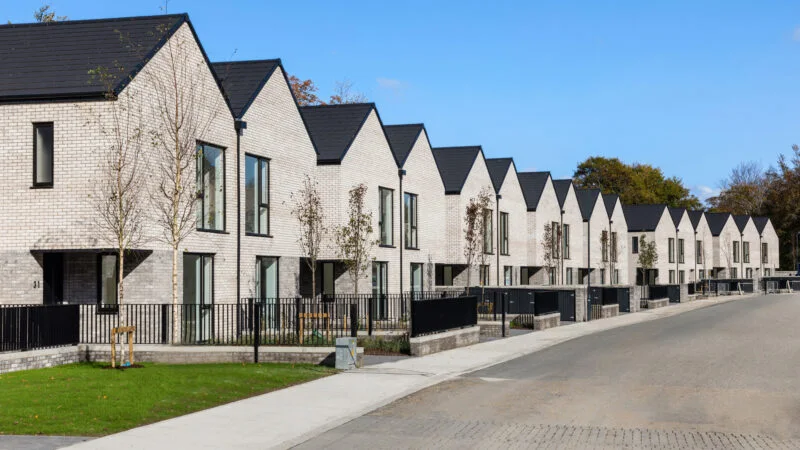
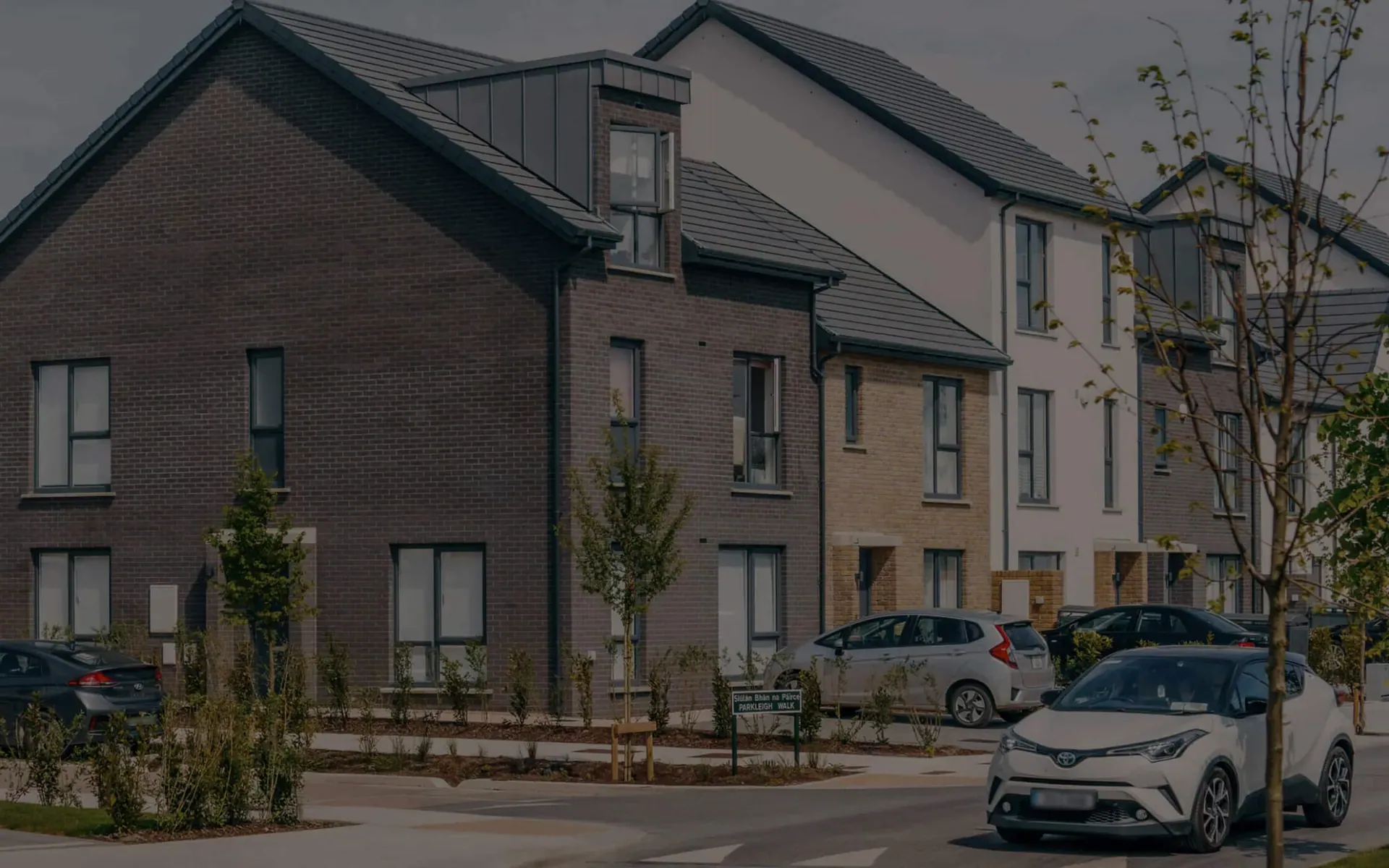
“Their expertise in the Passive House standards helped us not only meet regulatory requirements but also exceed our clients’ expectations.”
The questions boards ask.
FAQWhat does Passivhaus add to construction cost?
Less than the headline suggests. The 4 to 8 percent figure comes mostly from one-off houses and first-time teams. The Passivhaus Trust reckons around 60 percent of any premium can be designed out, and experienced teams building at scale, which is what we do in Ireland, land close to cost-neutral. The biggest lever is bringing the building physics in at feasibility, when orientation, form factor and glazing ratios are still free to change. The same decisions made late cost real money.
Does Passivhaus work at scale, or only on one-off houses?
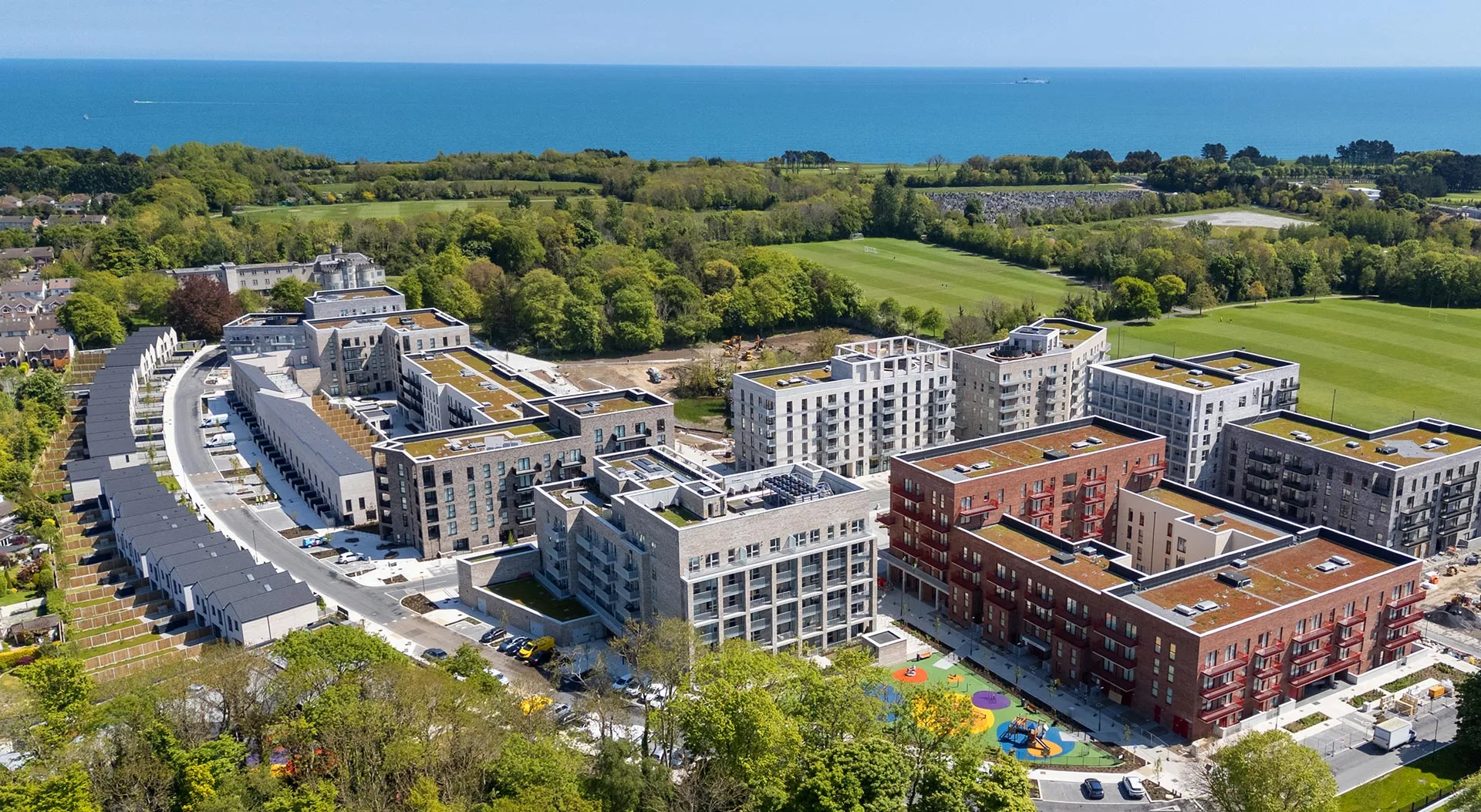
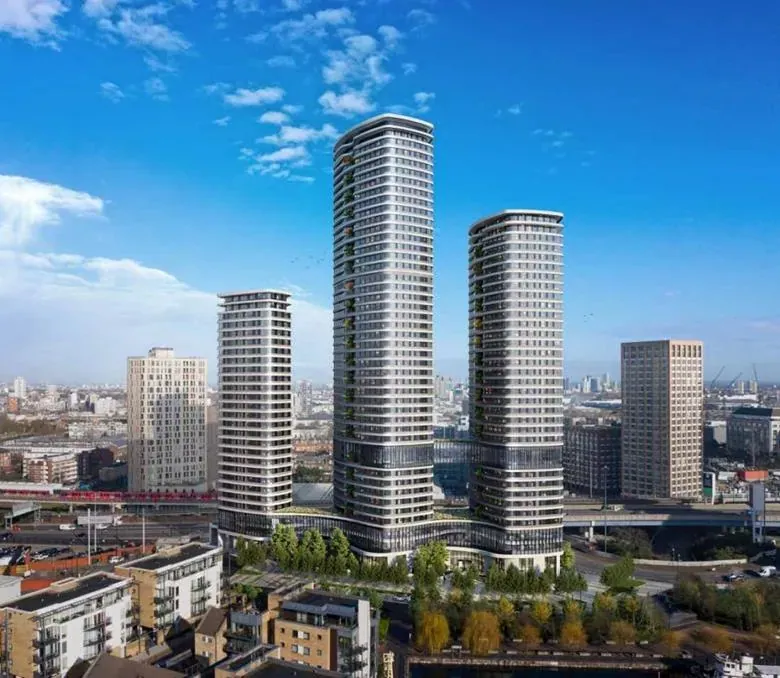
It works at scale, and scale is where the economics improve. Mosart is Passivhaus certifier on Seven Mills in Dublin, a new town of 5,500 homes, and Passivhaus designer on 2 Trafalgar Way in London, among the largest Passive House schemes in Europe. Repetition standardises the details, the site teams learn them once, and the cost premium shrinks scheme by scheme.
Why build past current building regulations?
Because the regulations are moving. England’s Future Homes Standard tightens carbon and heating requirements for new homes from 2027. Scotland has legislated for a Passivhaus-equivalent standard. Ireland’s Part L already requires NZEB and continues to tighten, and public-sector clients increasingly specify Passivhaus directly. A pipeline designed to today’s minimum is designed to be obsolete; a Passivhaus pipeline is already where the rules are heading.
Do certified buildings actually perform, or is it paperwork?
Certification is an independent check, not a self-declaration: the airtightness result is measured on site with a blower-door test, and the energy model is verified by an accredited certifier. Beyond the certificate, we monitor completed schemes in use, from single homes to full developments, hundreds of homes monitored live. The measured pattern is consistent: certified buildings use at least 50 percent less energy than a standard build. That is the conservative number.
What about overheating in highly insulated buildings?
Overheating is a design risk in every modern airtight building, not a Passivhaus problem specifically. The Passivhaus method requires overheating to be assessed and limited at design stage, and England’s Part O now demands the same thinking for all new residential buildings. Designed properly, with shading, glazing ratios and purge ventilation done early, a Passivhaus stays comfortable in summer as well as winter.
Is there a letting or sales advantage?
Lower running costs and better comfort have become selling lines in both markets: energy performance now appears in housing marketing where it never used to. For build-to-rent and student accommodation operators the argument is operational as much as promotional: warm, quiet, well-ventilated buildings generate fewer complaints, fewer damp and mould calls, and stronger ESG reporting. For social landlords, measured ventilation and mould-risk data matters directly under Awaab’s Law.
Put a number on your scheme.
A feasibility conversation costs nothing and settles most of the questions above against your actual site, programme and pro forma.