Feasibility studies that de-risk the scheme.
The cheapest place to fix a building is the first sketch, so that is where a feasibility study earns most. But a design already through planning is not too late: we run it through PHPP and tell you honestly whether it makes the standard, how close it is, and how to close the gap.
What a feasibility study delivers.
What it isA feasibility study is the cheapest insurance a project buys. Before the form is fixed, it tells you whether the site, programme and budget can reach the standard, and it flags the risks that are expensive to fix later: overheating, poor daylight, a form factor that will never hit the energy target. We run a first-pass PHPP model at concept stage, with the proposed massing, the site climate data and indicative envelope parameters, and report in PHPP terms, not opinion, where the building stands.
Two risks we look for in particular. Overheating, because a glazing ratio or orientation that overheats is far cheaper to change on the first sketch than to cool with plant later. And daylight, because a daylight study at concept gets the windows right for the people who will use the building, before they are sized for energy alone.
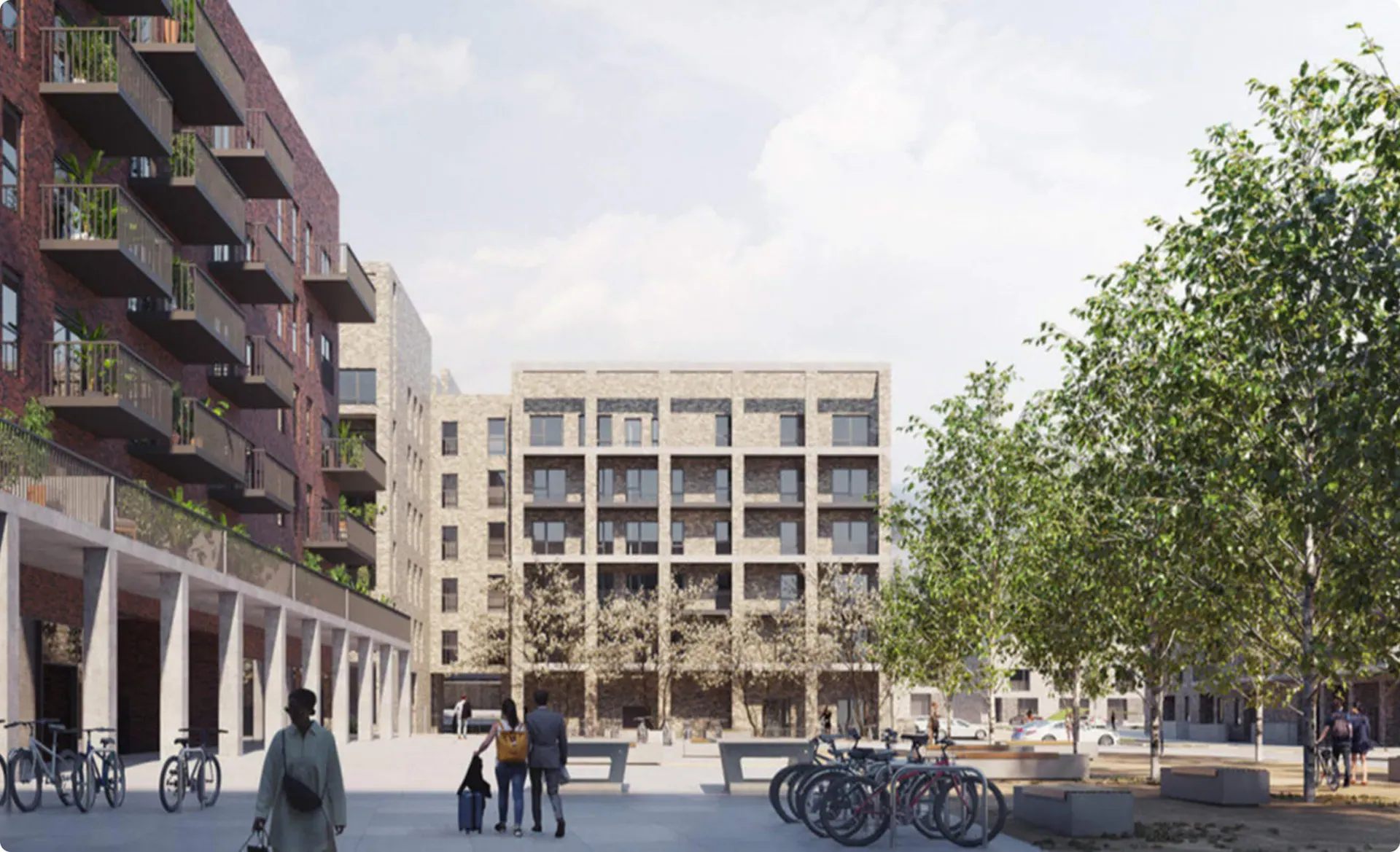
On large residential schemes, a feasibility study at concept has saved more energy and cost than any later specification upgrade. A single change to the form factor at RIAI Stage 1 can reduce the PHPP space-heating demand by 2 to 5 kWh/m²a. The same saving sought at Stage 4 needs fabric upgrades across the whole envelope.
Not every project reaches us at concept, and that is fine. Often a scheme is already through planning with the form fixed, and the question is sharper: does this design actually make the standard? We take the drawings as they are, build the PHPP model, and give you a straight answer. If it lands, you have proof. If it falls short, you get the number it misses by, whether the gap closes with fabric and detailing or needs a harder look, and what each route costs. The form may be fixed, but the decision about performance is still yours, and better made with the model in front of you than on a hope.
- First-pass PHPP model with proposed massing
- Overheating risk check (CIBSE TM59, Part O)
- Daylight study on the concept layout
- Climate data for the project location
- Indicative envelope parameters (U-values, airtightness target)
- Form-factor and orientation sensitivity analysis
- Gap to Passivhaus Classic (15 kWh/m²a) or EnerPHit threshold
- Indicative scope and programme for full certification
Method: how we work.
MethodWe review the project brief, the planning constraints, the programme and the budget envelope. If the client has a target standard (Classic, Plus, Premium, EnerPHit), we confirm that the programme has the right decision points and that the building science is engaged before those decisions are made.
We build a PHPP model from the concept drawings using the proposed massing, orientation and floor plate. Climate data is drawn from the nearest Meteonorm station. Envelope parameters are set at indicative values: wall U-value 0.10 to 0.15 W/m2K, window g-value and frame fraction at market-standard performance, airtightness at 0.6 ACH. The model gives a first PHPP space-heating demand and shows how far the design sits from the 15 kWh/m²a target.
We test the levers that are still free at concept stage: rotation, glazing ratio by facade, roof form and compactness. Each variant is run in PHPP and the results are compared on a single chart. This is where the most cost-effective decisions are made: a 15-degree rotation or a reduction in the north-facing glazing ratio can move the space-heating demand by more than any specification upgrade at Stage 3.
The study is delivered as a short, plain-language report with the PHPP model appended. It states the current PHPP result, the recommended design adjustments, the indicative envelope specification needed to close the gap, and the scope of work for full Passivhaus certification. We present the findings to the design team and answer questions before the concept is progressed.
Common questions.
FAQWhat does a Passivhaus feasibility study cover?
A Passivhaus feasibility study establishes whether a site, programme and budget are compatible with achieving the Passivhaus standard. It covers: the energy target (15 kWh/m²a space-heating demand for Classic), a first-pass PHPP model with the proposed form factor and orientation, envelope performance parameters including indicative U-values and airtightness target, a review of the site climate data and shading conditions, and a plain-language summary of what the standard requires and what it will cost to achieve it relative to a compliant-but-not-certified baseline.
When in the project programme should a feasibility study happen?
The feasibility study is most valuable before planning submission, and ideally before the massing is fixed. The decisions with the greatest impact on energy performance: orientation, form factor, window-to-wall ratios, roof type, are made at concept stage and are expensive to change later. Running a first-pass PHPP model at concept costs a fraction of what it costs to redesign at RIAI Stage 3 when the planning permission has fixed the form.
Does a feasibility study commit us to pursuing Passivhaus certification?
No. The feasibility study gives you the information to make that decision with full visibility of the cost and performance implications. Some clients use it to confirm the business case for certification. Others use it to set performance targets short of full certification, having established what full certification would require. Either way, the decisions that follow are better-informed.
Can you run a feasibility study on a retrofit project for EnerPHit?
Yes. The EnerPHit standard exists for buildings where the existing fabric makes the full Passivhaus space-heating target difficult or impossible to achieve. EnerPHit permits either a component-based approach (meeting minimum performance requirements for each envelope element) or a demand-based approach (achieving a higher but defined space-heating target adjusted for the climate). A feasibility study for EnerPHit maps the existing building, identifies the interventions that move the result most, and tests both compliance routes in PHPP.
Commission a feasibility study.
Tell us the building type, scale, planning stage and target standard. We will confirm the scope and programme for the feasibility study and what happens next.