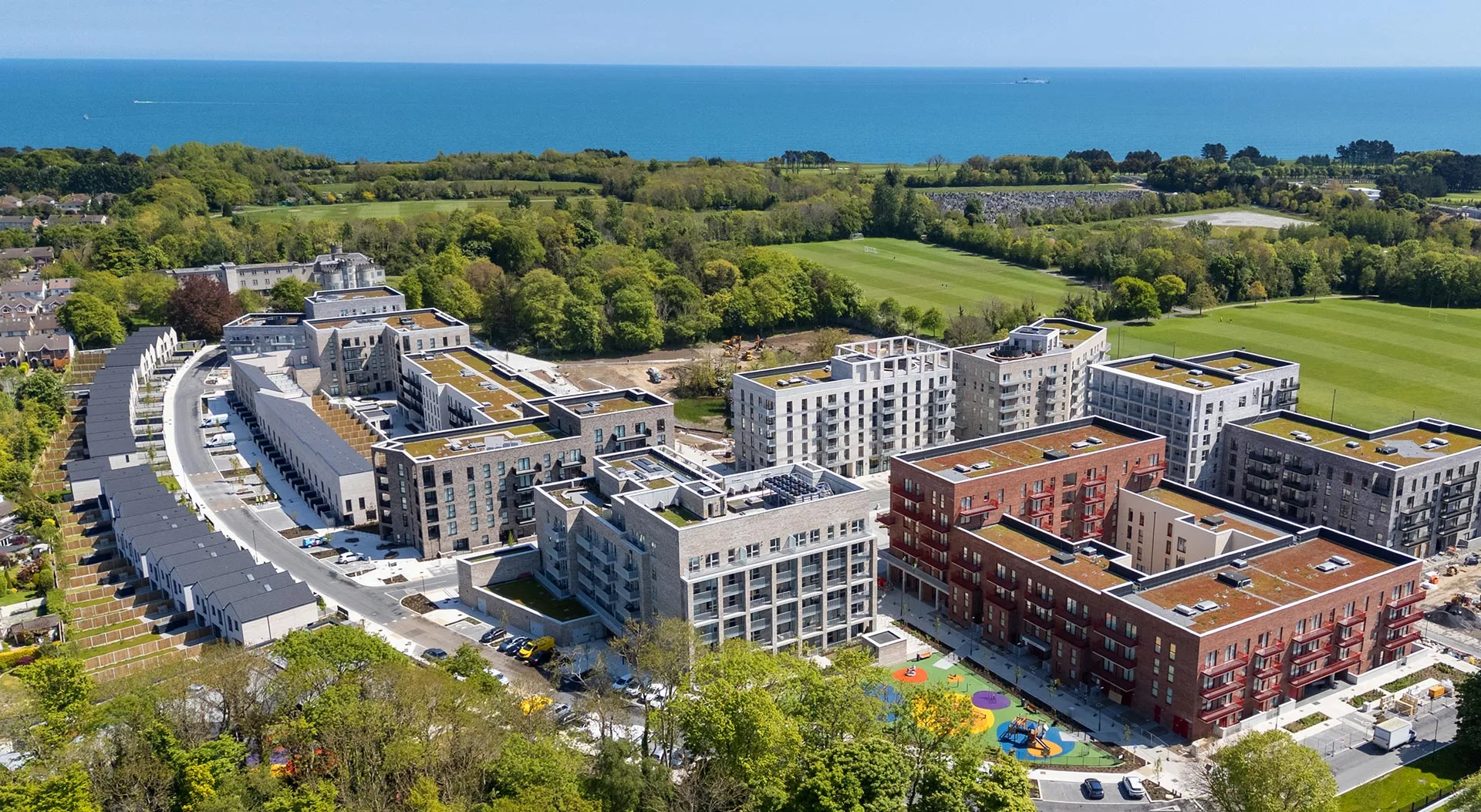
The standard does not change at scale.
550 homes or 5,500: the PHPP still closes at 15 kWh/m²a.
Mosart has delivered Passivhaus-certified buildings at every scale: from a single house to a 550-home urban masterplan, and as certifier on a 5,500-home new town. The method does not change, but the coordination challenge does. Integrated PHPP modelling, thermal bridge catalogues and airtightness strategy applied consistently across hundreds of unit types is where the practice has built its deepest body of evidence.
Landmark projects.
Scale work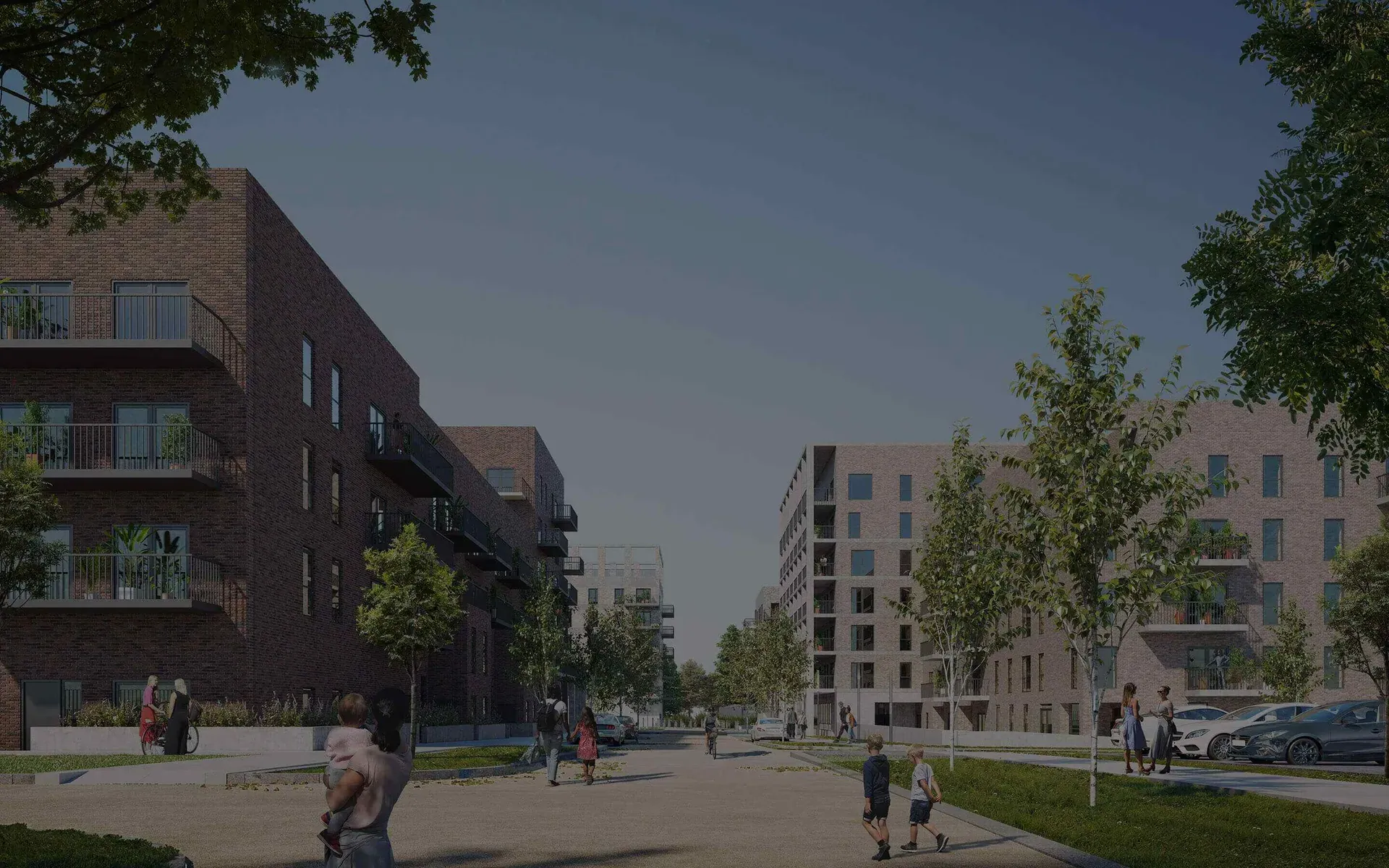
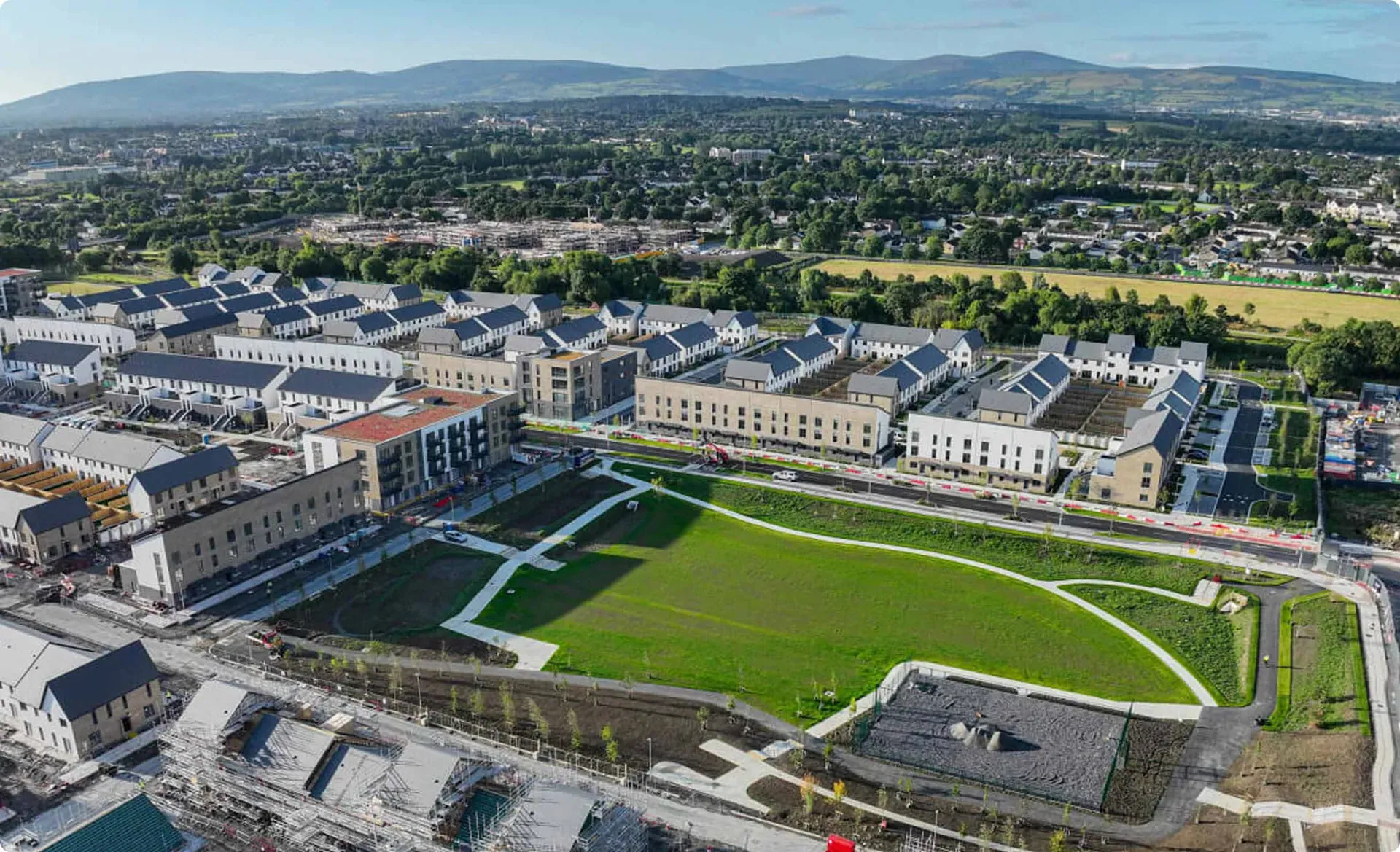
The largest single-phase Passivhaus social housing scheme in Ireland, with Mosart as Passive House designer for the Land Development Agency and Dún Laoghaire-Rathdown County Council. PHPP modelled from feasibility, every thermal bridge calculated, airtightness layer continuous across all units.
View project →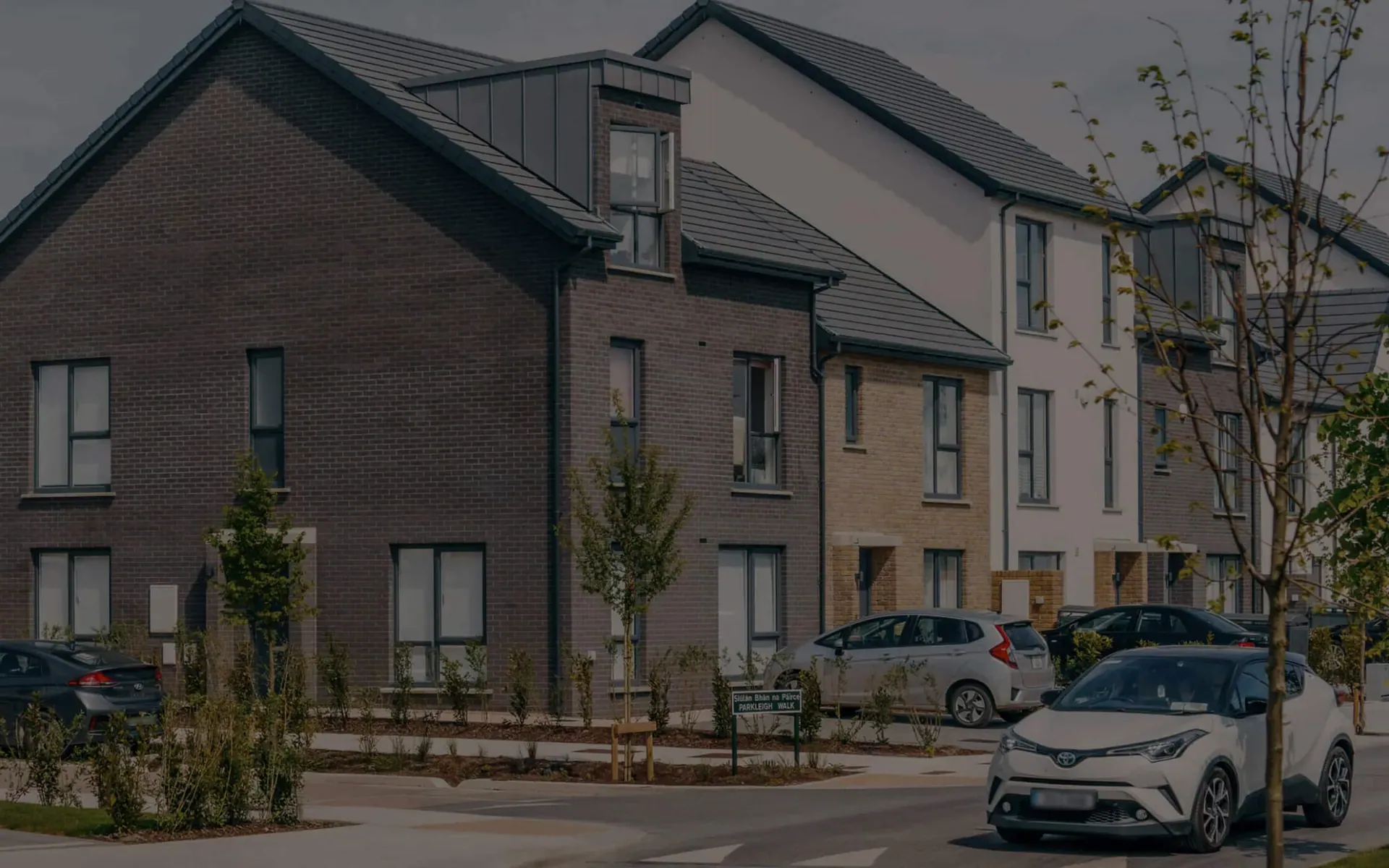
One of the largest Passivhaus masterplans in the world. Mosart acts as independent Passivhaus certifier for Cairn Homes, reviewing the PHPP models, thermal bridge calculations and construction evidence across the full scheme as it is built out in phases.
View project →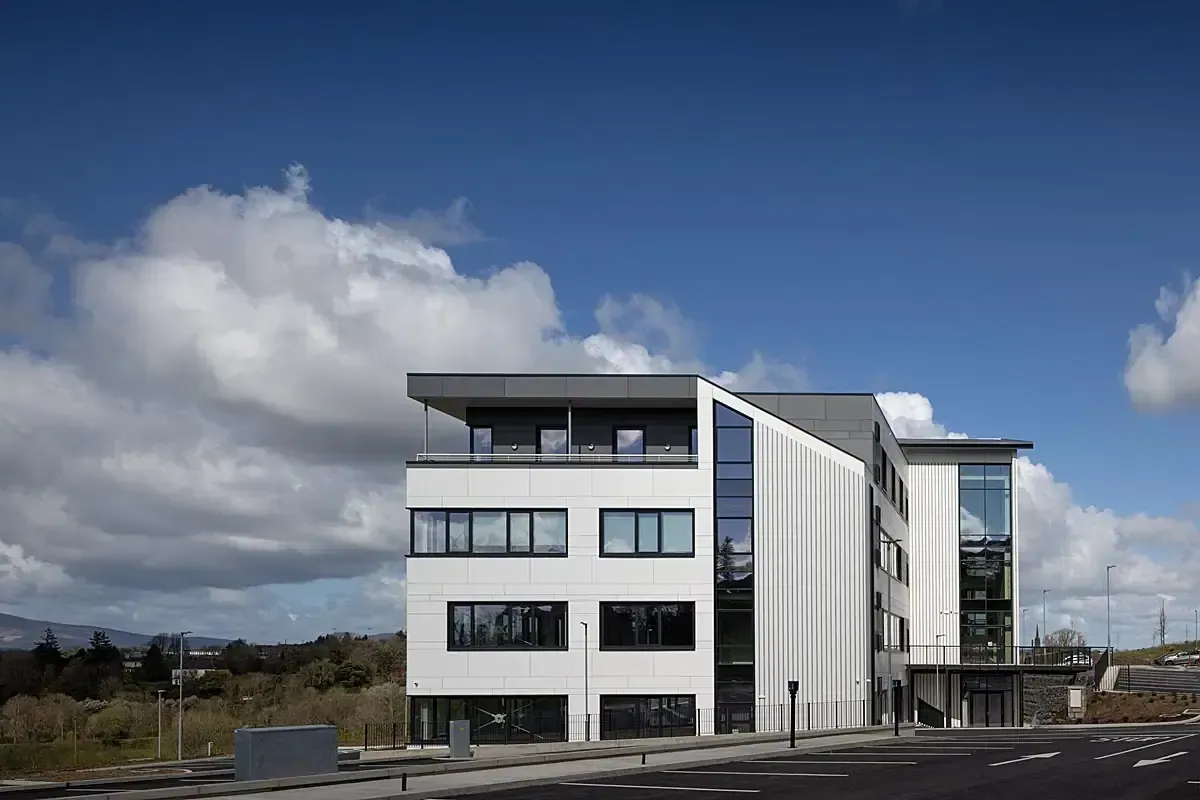
A certified Passivhaus commercial building in the south east of Ireland, awarded most sustainable project of 2024. Demonstrates that the standard applies with equal rigour to commercial and civic typologies, not only housing.
View project →What changes at scale, and what doesn't.
Passivhaus works at large scale because the physics does not change between a terrace house and a 500-unit apartment scheme. If anything, the compact form of dense housing makes the energy targets easier to achieve: the surface-to-volume ratio is lower, the space-heating demand per unit is naturally lower. The challenge is not the physics. It is the coordination: the PHPP must track the design as it changes, the thermal bridge catalogue must cover every distinct junction, and the airtightness layer must be continuous across every unit interface and service penetration.
We set up the PHPP around whole buildings from the start, each modelled with its full mix of apartment types. As the apartment mix changes between planning and construction, the model is updated. The same discipline applied on a 20-unit scheme applies on a 550-unit scheme. The certifiers are separate from the design team on every project, so the certificate reflects a genuine independent review of the evidence.
Common questions.
FAQDoes the Passivhaus standard work at large residential scale?
Yes, and in some respects large schemes are easier to certify than individual houses. The compact form of apartment blocks and terrace housing gives a lower surface-to-volume ratio, reducing the space-heating demand naturally. The challenge at scale is coordination: the airtightness layer must be continuous across hundreds of units, thermal bridge details must be consistent across thousands of junctions, and the certification evidence pack must cover the whole scheme. Mosart has worked on Passivhaus schemes from individual houses to 5,500 homes on a single masterplan.
What is the certifier role on a large scheme, and why must it be independent?
On a large scheme, the Passivhaus certifier reviews the PHPP model, the thermal bridge calculations, the component certificates, the airtightness test results and the construction evidence pack, then issues the PHI certificate. The PHI requires that the certifier is independent of the design team: a lead architect cannot certify their own building. Mosart has both an architecture practice and an independent certification team. When we are the architect, our certifiers are not the designers of that project. When we are the certifier only, as on Seven Mills, we review the design team’s work against the PHI standard.
How does PHPP work across hundreds of units with different apartment types?
The PHPP is set up around whole buildings rather than individual apartments: each block is modelled with its full mix of apartment types in place, because a corner apartment with two exposed facades loses heat differently from an internal mid-floor apartment with only one. Modelling the building as a whole captures how the units combine, and the results are weighted across the scheme to give the whole-scheme average. The PHI accepts this approach for multi-unit schemes. The critical discipline is that the PHPP model tracks the design: if the apartment mix changes between planning and construction, the PHPP must be updated.
Start a large-scale project.
Tell us the building type, scale and programme. We will tell you what the Passivhaus standard requires at that scale and what it will take to get there, from feasibility to certificate.