The standard for the buildings we already have.
EnerPHit is Passivhaus for retrofit: the same building physics applied to existing buildings, for warm, dry, low-energy homes with an independently certified result.
Most of the buildings that will exist in 2050 are already standing, and they hold the hardest carbon and comfort problems. EnerPHit, the Passive House Institute’s retrofit standard, brings those buildings up to a verified low-energy standard without pretending they are new. It is how you improve the stock you already own.
What an EnerPHit retrofit delivers.
The standardEnerPHit takes the Passivhaus method, ultra-low heat loss, continuous insulation, controlled ventilation with heat recovery, and applies it to an existing building where starting from scratch is not an option. The criteria are relaxed just enough to be achievable on real fabric: a heating-demand cap of 25 kWh/m²a in our climate, or a component-by-component route, and an airtightness target of 1.0 air changes per hour rather than 0.6.
What the occupant gets is the same as a new Passivhaus: even temperatures, no cold spots, filtered fresh air, controlled humidity, and a heating bill that drops sharply and stays down. What the asset owner gets is a building that is measurably improved and independently certified, rather than a better rating on paper.
Not every building is a good EnerPHit candidate. We tell you that at feasibility. Where the full standard does not stack up, we scope the deepest retrofit that does, so the budget goes where it makes the most difference.
How we approach a retrofit.
MethodSurvey and feasibility
Understand the existing fabric, condition and constraints, model it in PHPP, and test which EnerPHit route, component or energy-demand, fits the building and the budget.
Hygrothermal safety
WUFI and Glaser analysis on the critical junctions, especially internal insulation to solid or heritage walls, so the build-up is safe from condensation and decay for its life.
Retrofit plan
Where the work has to be phased, an EnerPHit Retrofit Plan sequences it correctly across budget cycles, so no step undoes another and the building reaches the standard in the right order.
Certify and monitor
Independent EnerPHit certification on completion, and the option to verify the result in use with Pulse, which matters most for social landlords under Awaab’s Law.
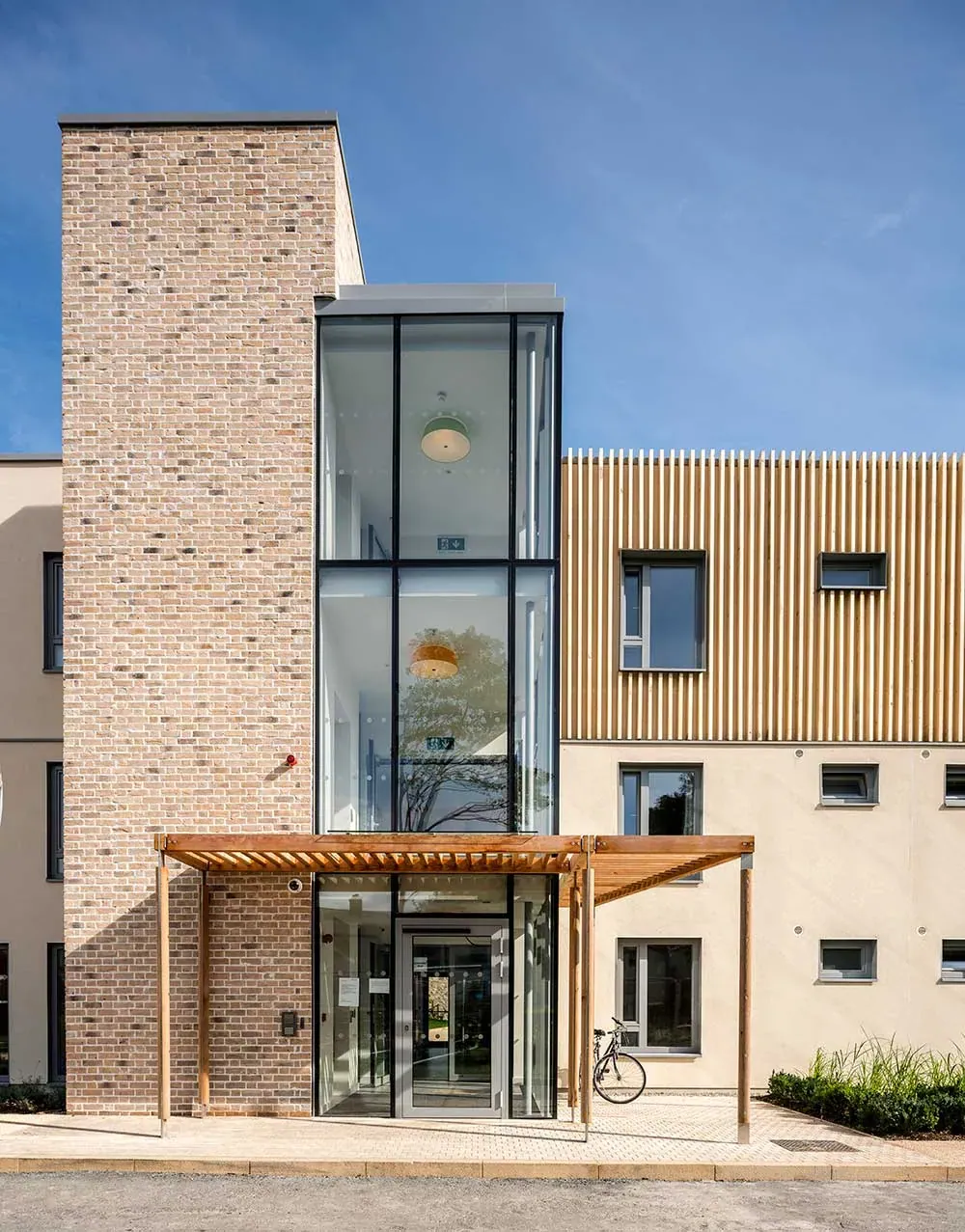
Rochestown House.
A social housing deep retrofit in Dún Laoghaire, taking existing homes to a certified low-energy standard: warmer, drier, far cheaper to run, and evidenced rather than assumed.
See the project Retrofit architecture & Pathfinders Social & affordable housing
EnerPHit, answered.
FAQWhat is EnerPHit?
EnerPHit is the Passive House Institute standard for deep retrofit of existing buildings. The full Passivhaus standard assumes you can design the fabric from scratch; existing buildings rarely allow that, because of their structure, party walls, heritage status or site constraints. EnerPHit applies the same building physics to what you already have, with criteria relaxed just enough to be achievable on a real existing building while still delivering very low heating demand, comfort and a certified result.
What are the EnerPHit targets, and how do they differ from new-build Passivhaus?
EnerPHit can be certified by two routes. The component method sets a U-value and quality criterion for each element of the envelope. The energy demand method caps annual space-heating demand (25 kWh/m²a in the cool-temperate climate that covers Ireland and the UK, adjusted by climate zone). The airtightness target is 1.0 air changes per hour at 50 Pa, against 0.6 for new Passivhaus, recognising that an existing structure cannot always be sealed as tightly. We advise on which route suits your building before any design commitment.
Can a building be retrofitted in stages?
Yes. The EnerPHit Retrofit Plan (ERP) lets you certify a phased retrofit: a single coordinated plan that sequences the work over years or budget cycles so each step is done correctly and in the right order, without a later phase undoing an earlier one. This is how most occupied housing stock and public estates realistically reach the standard, and it is exactly the kind of plan that protects an asset owner from paying twice.
What about moisture and condensation risk in a retrofit?
This is the real risk in any deep retrofit, especially where insulation goes on the inside of a solid or heritage wall. Adding insulation changes where the structure sits relative to the dew point, and a detail that is wrong can trap moisture and cause decay or mould. We run hygrothermal analysis (WUFI dynamic modelling and Glaser steady-state to BS EN ISO 13788) on the critical build-ups so the retrofit is safe for the fabric over its life, not just efficient on day one.
Does EnerPHit work for social housing and Awaab’s Law?
It is one of the strongest answers available. EnerPHit delivers warm, dry, well-ventilated homes with controlled humidity, which is precisely what Awaab’s Law is driving social landlords toward on damp and mould. Mosart has applied the standard to social housing retrofit, including Rochestown House in Dún Laoghaire. Paired with our Pulse monitoring, a landlord can also prove the homes are performing and evidence compliance continuously.
Is EnerPHit worth it over a standard retrofit?
For an asset you intend to hold, usually yes. A standard retrofit often improves the energy rating on paper while leaving comfort problems, cold spots and a performance gap in place. EnerPHit is a whole-building method that closes that gap and is independently certified, so the improvement is real and verifiable. We will tell you honestly at feasibility whether a building is a good EnerPHit candidate or whether a lighter intervention makes more sense.
Have a building worth keeping?
Send us what you have. A feasibility study tells you honestly whether EnerPHit is the right call and what it would take.