Your independent Passivhaus certifier.
Appoint an independent, PHI-accredited Passive House certifier directly. Seven accredited certifiers in-house, the largest independent team in Ireland, certifying our own and third-party designs to Classic, Plus, Premium and EnerPHit.
What an independent Passive House certifier does.
What it isPHI Passivhaus certification is not a planning condition or a regulatory compliance exercise. It is independent verification by the Passivhaus Institut that a building as designed and built meets the absolute energy performance thresholds of the standard: 15 kWh/m²a specific space-heating demand for Passivhaus Classic, and 0.6 ACH at 50 Pa airtightness, confirmed by a physical pressure test on the completed building.
Certification requires an independent PHI-accredited certifier to review the PHPP model, the thermal bridge analysis, the component specifications, the airtightness test result and the as-built documentation. The certifier cannot be the person who designed the building, and that independence is what makes the certificate worth having.
Mosart has 7 PHI-accredited certifiers in-house, the largest independent team in Ireland. We certify buildings that Mosart designed and buildings designed by other architects and engineers. Where we are the architect, a separate certifier from within the practice who was not involved in the design acts as the independent certifier.
| Standard | Heating | PER | Generation |
|---|---|---|---|
| Classic | ≤ 15 | ≤ 60 | – |
| Plus | ≤ 15 | ≤ 45 | ≥ 60 |
| Premium | ≤ 15 | ≤ 30 | ≥ 120 |
| EnerPHit | ≤ 25 | ≤ 60 | – |
All values kWh/m²a. Every standard also requires airtightness ≤ 0.6 ACH at 50 Pa (EnerPHit ≤ 1.0), verified by pressure test, and independent PHI-accredited certification.
The certificate is evidence: to funders, tenants, grant bodies and future owners that the building performs as specified. In Ireland and the UK, certified Passivhaus buildings are increasingly required for public funding, local authority procurement and ESG reporting. The process of pursuing certification also improves the design, because the certifier's design-stage review catches errors before the building is built.
The certification process.
ProcessThe certifier reviews the PHPP model, the thermal bridge analysis and the construction documentation at Stage 4 before the project goes to site. This is the point to catch any issue that would fail certification: a junction with a psi-value above the Passivhaus threshold, a window specification that raises the space-heating demand above 15 kWh/m²a, a ventilation layout that will not achieve the required heat-recovery efficiency. Problems found at design stage are cheap to fix. Problems found after the building is complete are not.
During construction, the certifier may review airtightness layer installation at the point where the membrane is complete but before internal finishes cover it. Any deviation from the specified products, particularly windows or the heat-recovery unit, is assessed against the PHPP model. The certifier advises the design team if a deviation would breach the standard before it is too late to change it.
On completion, the building is tested to EN ISO 9972. The result must be no more than 0.6 ACH at 50 Pa for Passivhaus Classic (and EnerPHit, with specific rules depending on construction type). The certifier reviews the test report, the as-built drawings showing the airtightness layer as constructed, and the final PHPP model updated with the measured n50 value and any product deviations.
The certifier submits the PHPP model, the airtightness test report, the component specifications and the as-built documentation to PHI in Darmstadt. PHI reviews the submission and issues the Passivhaus certificate. The certificate is registered in the PHI database and is publicly verifiable. For multi-unit residential schemes, individual units or building groups may be certified as they are completed.
In practice.
Evidence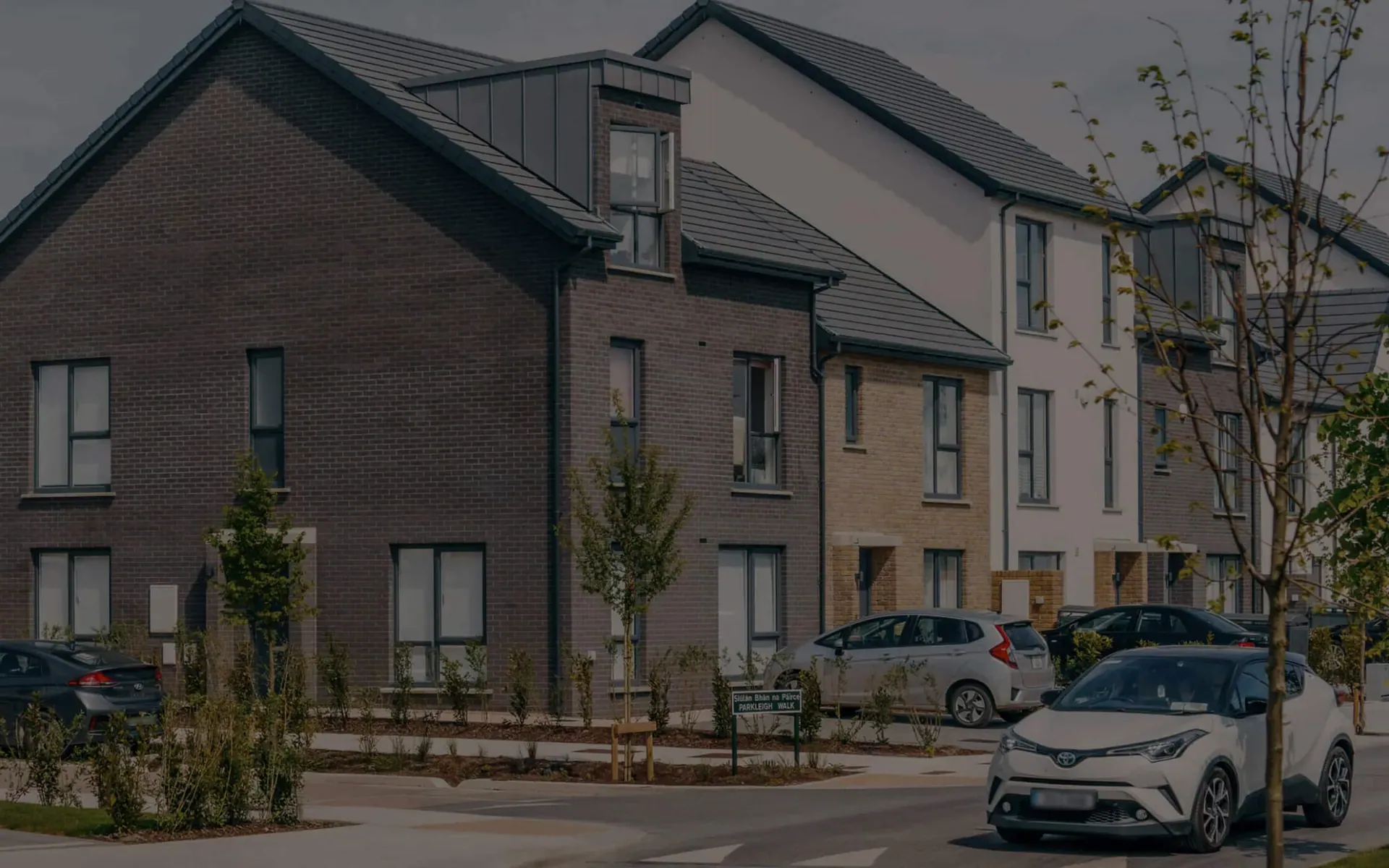
5,500-home new town. Mosart as certifier.
At Seven Mills, Mosart is the independent Passivhaus certifier for a 5,500-home new town being delivered by Cairn Homes. Individual buildings are certified to PHI Passivhaus Classic as they are completed. This is large-scale certification management: the certifier establishes the plot-level energy rules at masterplanning stage, then reviews the PHPP models, thermal bridge calculations and construction evidence, certifying each building against those rules as the scheme progresses.
See the Seven Mills case study →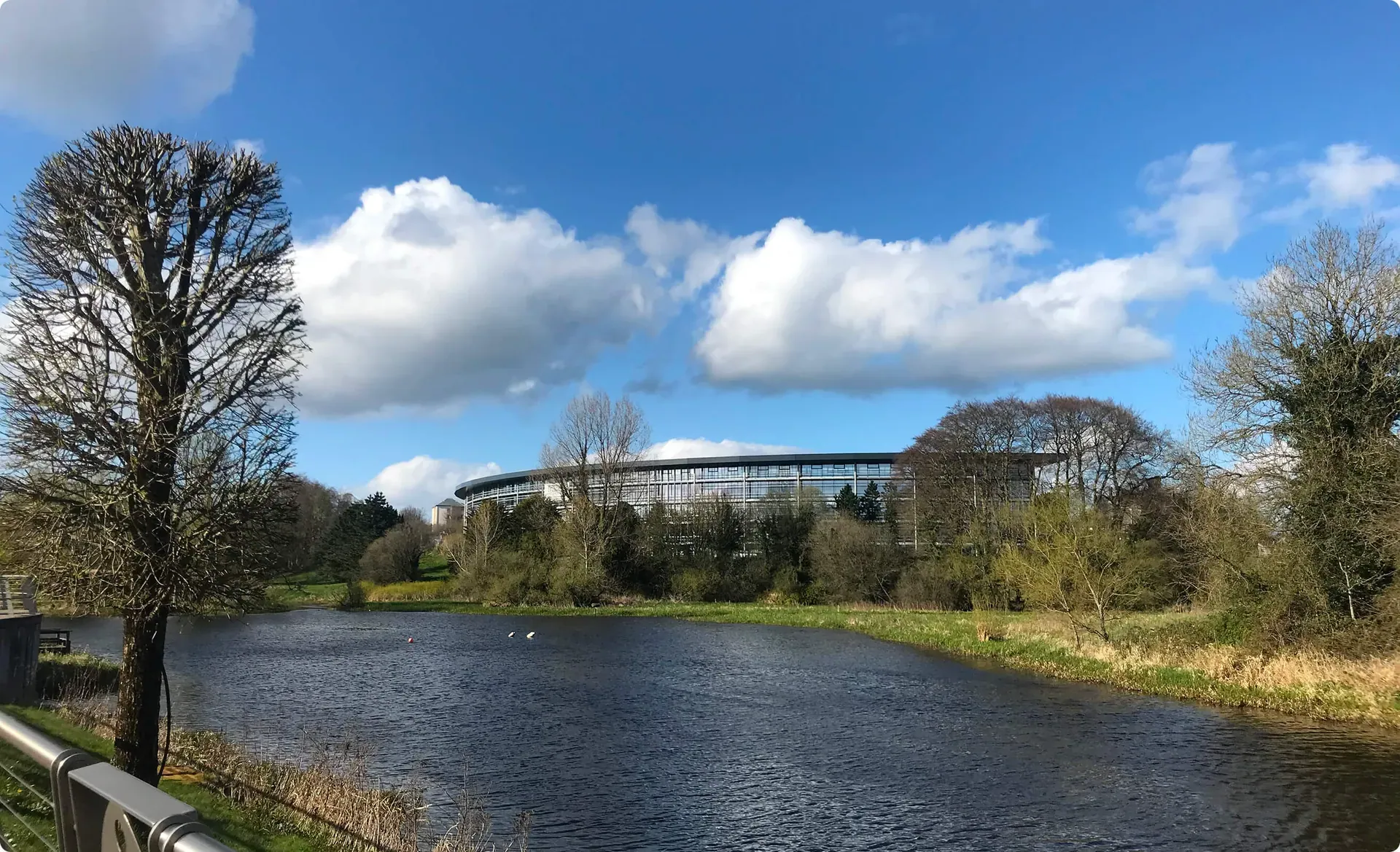
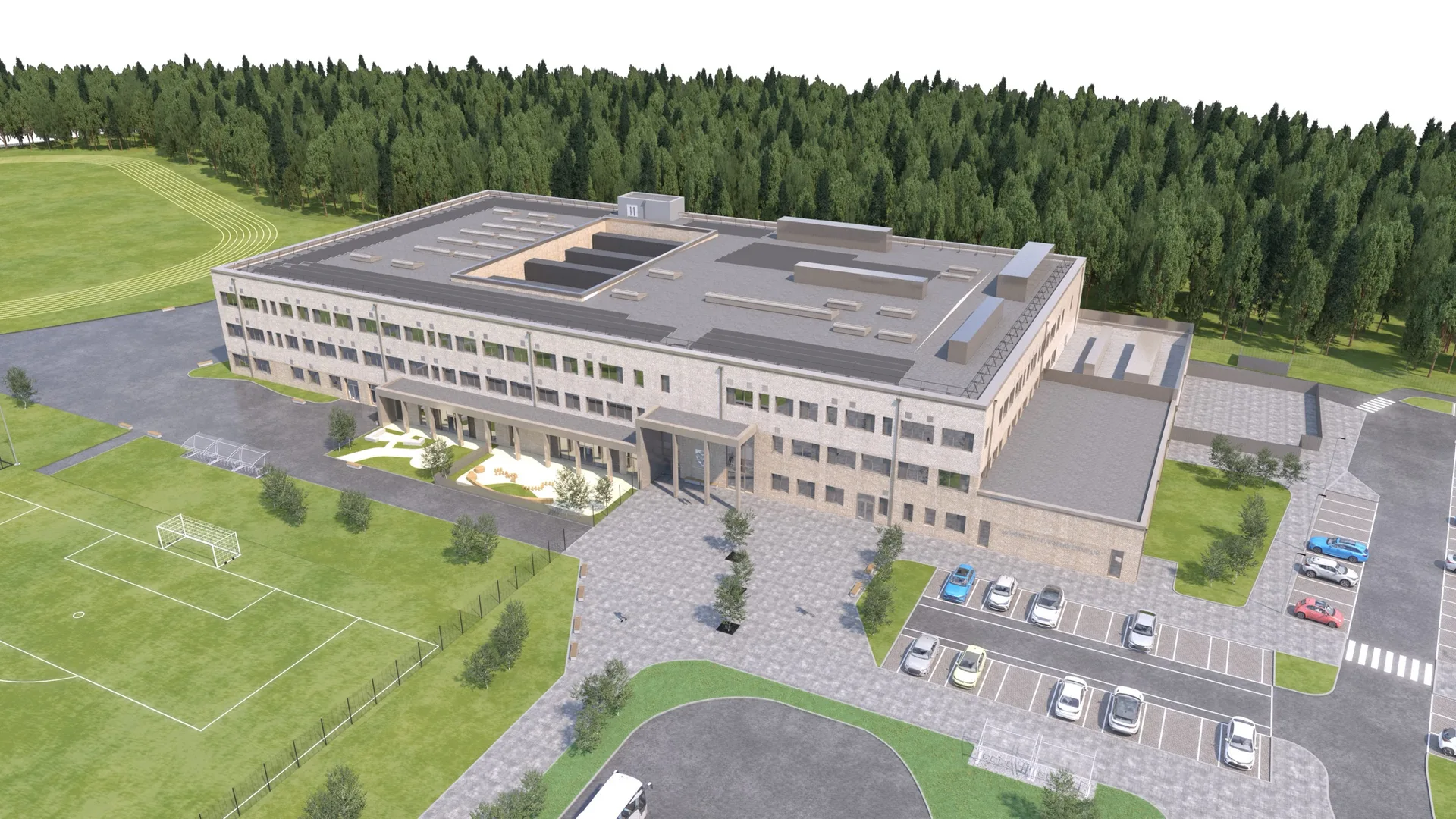
World's first Passivhaus Premium education building.
Erne Campus is the world's first Passivhaus Premium certified education building. Here Mosart was the Passivhaus designer, not the certifier: the architecture was by others, and we took it through PHPP, thermal bridge analysis to BS EN ISO 10211 and the airtightness strategy to the highest PHI classification. Where Mosart is the Passivhaus designer, a separate independent certifier verifies the building, never us.
See the Erne Campus case study →Estimate your thermal bridge scope.
Thermal bridge analysis is a required input for Passivhaus certification. Use our estimator to scope the junction analysis and get an indicative fee in 30 seconds. Real Mosart rates, confirmed by a certifier before it becomes a quote.
Common questions.
FAQHow do I find and appoint a Passivhaus certifier?
You appoint a PHI-accredited certifier directly, separate from whoever designs the building. Because the certifier must be independent of the design team, it is the client or design team who engages them. Mosart has 7 PHI-accredited Passive House certifiers in-house, the largest independent team in Ireland, certifying in Ireland and the UK. Tell us the building type, the target standard and the design stage, and we will confirm the route and scope.
Do I appoint the certifier, or does my designer?
The certifier is appointed independently of the design team and is never the person who designed the building. In practice the client or the design team appoints the certifier directly, and that direct, independent appointment is what keeps the certificate impartial. Where Mosart is the Passivhaus designer on a project, a separate Mosart certifier cannot act as the independent certifier for that same building.
How does Passivhaus certification work?
PHI Passivhaus certification is granted by the Passivhaus Institut after a PHI-accredited certifier has reviewed and approved the PHPP energy model, the airtightness test results (max 0.6 ACH at 50 Pa), the component specifications and the as-built documentation. The certifier must be independent of the design team. The process starts at design stage, when the certifier reviews the PHPP model to confirm the design meets the standard before construction begins. After completion, the certifier submits the as-built documentation to PHI for the certificate.
How long does Passivhaus certification take?
The design-stage review takes two to four weeks once the PHPP model is submitted. The as-built certification review takes four to eight weeks after the airtightness test and as-built documentation are submitted. PHI then processes the application, typically within four to eight weeks. The process runs in parallel with design and construction, not sequentially, so it does not extend the programme if managed correctly from the start.
Can Mosart certify a building that Mosart did not design?
Yes. We certify buildings designed by other architects and engineers. Our certifiers are independent of the design team: we were not involved in the design, which is a PHI requirement. We review the PHPP model, the thermal bridge analysis and the airtightness test results against the PHI criteria and, if the building meets the standard, submit the certification application to PHI on behalf of the client.
What is the difference between Passivhaus Classic, Plus and Premium?
Classic: 15 kWh/m²a space-heating demand, 60 kWh/m²a PER, 0.6 ACH airtightness. Plus: Classic requirements plus at least 60 kWh/m²a renewable energy generation on site, PER max 45 kWh/m²a. Premium: Classic requirements plus at least 120 kWh/m²a generation, PER max 30 kWh/m²a. EnerPHit is the retrofit standard: 25 kWh/m²a or component-based compliance. All four require independent PHI-accredited certification.
How much does Passivhaus certification cost?
Certification fees depend on building size and complexity, the number of distinct unit types, and whether the design-stage PHPP model has already been built. Use our thermal bridge estimator tool to get an indicative scope for the analysis work, or contact us with the building brief for a certification fee proposal.
Commission certification.
Tell us the building type, target standard and design stage. We will confirm the certification route, the scope of the review and what the process will require.