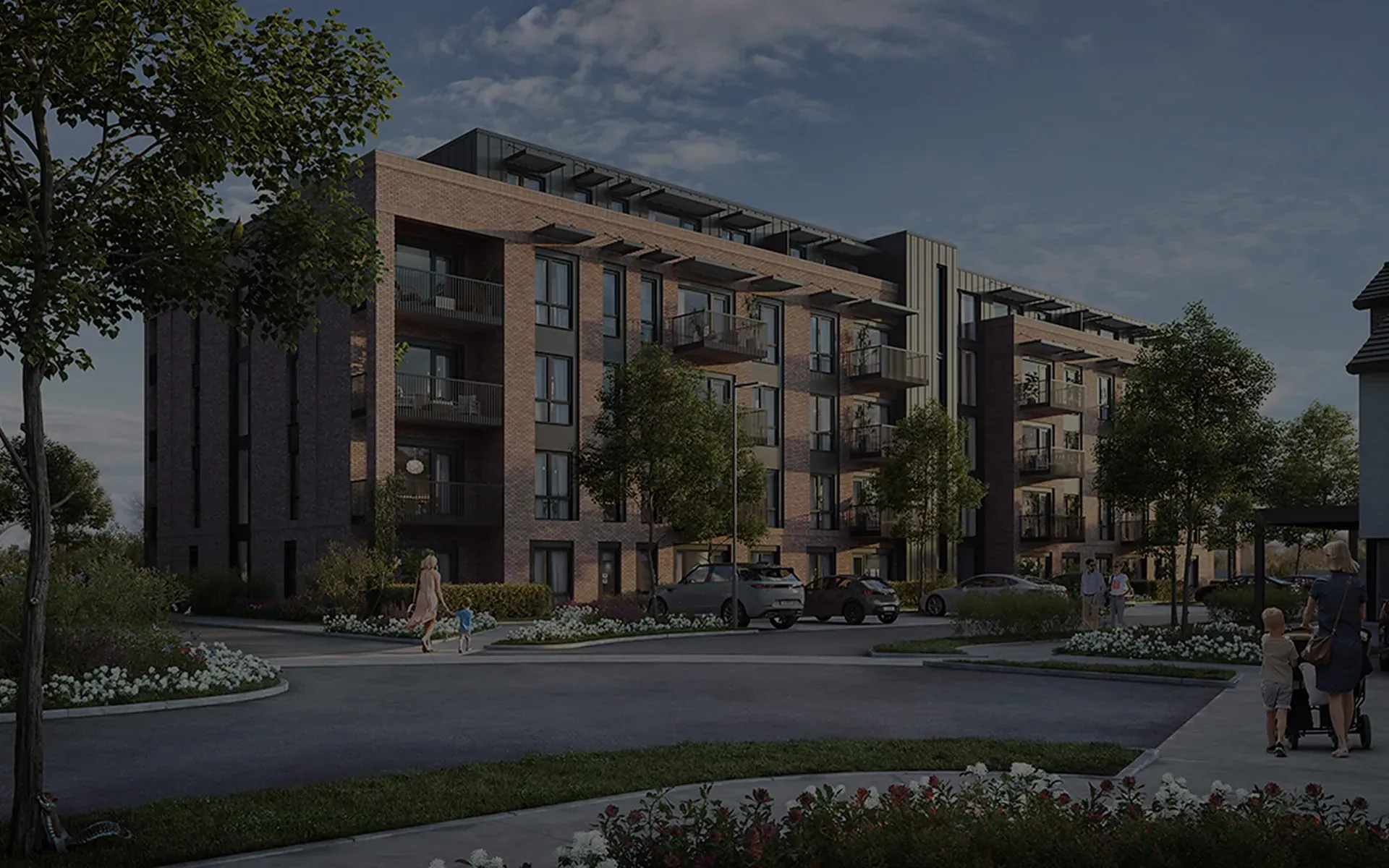
Build-to-rent that costs less to run.
In build-to-rent you carry the running costs for years after handover. Passivhaus lowers them, keeps tenants longer, and stands up in ESG reporting, certified and measured in use.
Build-to-rent is the one residential model where the people who fund the building also live with its running costs for decades. That changes the maths on performance. Every euro of operating cost, every void week and every avoidable complaint comes off net operating income, and a certified Passivhaus is built to reduce all three.
What the standard does for the operator.
The operating caseOperating cost
Very low energy demand and simple, small plant cut common-parts running cost and maintenance over the hold period. The building costs less to run, every year you own it.
Retention & voids
Warm, quiet, well-ventilated homes with no damp or cold spots remove the common reasons tenants leave or complain. Better retention means fewer void weeks, which is income you do not get back.
Lettability
Low, predictable bills are a real differentiator in a competitive rental market, and they reduce arrears risk by protecting tenants from energy-price shocks.
ESG & value
Certified performance plus continuous in-use data is an auditable position for ESG reporting and green finance, and it protects the asset’s value as minimum energy standards tighten.
Rental and multi-residential, delivered.
From student-and-residential towers in London to cost-rental and social schemes in Dublin, we work at the scale and on the operational terms that rented stock demands, and we monitor it in use.
2 Trafalgar Way, Canary Wharf Whitehaven, monitored in use How Pulse proves it
Build-to-rent, answered.
FAQWhy does Passivhaus suit build-to-rent specifically?
Build-to-rent is one of the few residential models where the developer is also the long-term operator, so the building’s running performance lands on the same balance sheet that built it. Passivhaus turns that into an advantage: very low energy demand, low maintenance plant, and a comfortable, quiet, well-ventilated home that tenants stay in. Lower operating cost, lower voids and fewer complaints all feed net operating income over the hold period, the number BTR investors care about most.
How does it affect voids, retention and complaints?
Comfort drives a lot of tenant churn. Cold rooms, condensation, mould, noise and high bills generate complaints, callouts and move-outs. A certified Passivhaus runs at even temperatures with filtered fresh air and controlled humidity, so the common causes of complaints are designed out. Fewer complaints means lower management cost, and better retention means fewer void weeks, which is income you do not get back.
What about energy bills and who pays them?
In build-to-rent the split of energy cost varies, but it matters either way. Where the operator carries common-parts and plant energy, Passivhaus cuts that bill directly. Where tenants pay, low and predictable bills are a letting advantage in a competitive market and protect tenants from energy-price shocks, which reduces arrears risk. Either way, in-use monitoring through Pulse lets the operator see and prove the performance rather than assume it.
How does Passivhaus help with ESG and green finance?
Institutional BTR capital increasingly reports against ESG frameworks and accesses green or sustainability-linked finance that rewards measured performance. A certified Passivhaus with continuous in-use data holds up well in that context: the performance is third-party certified and then evidenced in operation, not self-declared.
Does it futureproof the asset against regulation?
Yes. Minimum energy efficiency standards for rented property keep tightening, and a building designed only to today’s baseline is designed to need upgrading. Passivhaus and EnerPHit sit well ahead of the regulatory direction in both Ireland and the UK, so a BTR asset built or retrofitted to the standard protects its lettability and value as the rules move, including the damp-and-mould duties that now bear on the rented sector.
Has Mosart delivered rental and multi-residential at scale?
Yes. We work across large multi-residential and rental schemes, including Urbanest student-and-residential developments and 2 Trafalgar Way in Canary Wharf (1,672 bedrooms and 80 apartments), and cost-rental and social schemes such as Shanganagh Castle (550+ homes) and Whitehaven for Cairn, the latter monitored in use across 255 homes. We understand the operating economics of rented stock, not only how it is built.
Modelling a BTR scheme?
Bring us in at feasibility and we will show you how the standard moves the operating numbers, not just the energy rating.