Most Passivhaus certification problems trace back to seven avoidable mistakes: late PHPP modelling, an incorrect treated floor area, unmodelled thermal bridges, airtightness treated as a product rather than a continuous layer, mid-construction substitutions, ventilation that cannot deliver its rated efficiency, and starting the certification conversation too late. Each is cheap to fix early and expensive to fix late.
Why do projects fail Passivhaus certification?
Rarely because the targets are out of reach. The criteria are fixed and public: space-heating demand of 15 kWh/m²a or less, airtightness of 0.6 air changes per hour at 50 Pa verified by a blower-door test to EN ISO 9972, primary energy renewable of 60 kWh/m²a or less, and no more than 10% of hours over 25°C. Projects struggle when the evidence behind those numbers is assembled too late, or when the built reality drifts away from the model during construction.
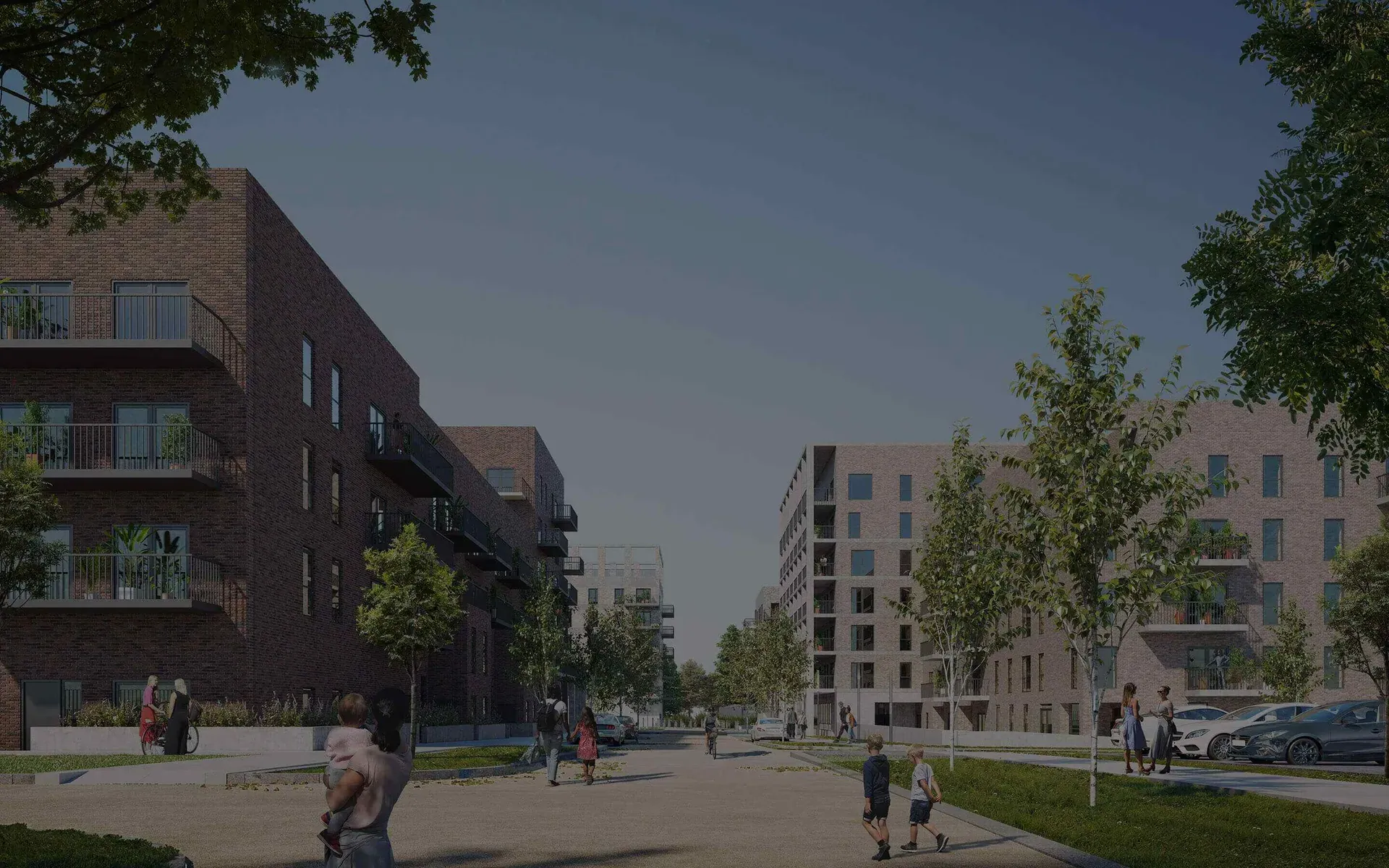
Mosart was Passive House designer for the 550 plus Passivhaus homes at Shanganagh Castle in Dún Laoghaire, and the same handful of problems appears on project after project. Here they are, roughly in the order they surface.
The seven pitfalls
-
Treating PHPP as a late check instead of a live design tool. PHPP is the energy model the certifier verifies against. If it is only built at Stage 4 to confirm a finished design, every problem it finds becomes a redesign. Run it from concept and it steers form, glazing and specification while those decisions are still free to change.
-
Getting the treated floor area wrong. TFA is the denominator behind every kWh/m²a result, so an error here moves every headline number at once. PHPP counts living space at 100%, service and ancillary space at 60%, areas with 1.0 to 2.0 m of headroom at 50%, and anything under 1.0 m not at all. Overstate the TFA and the design looks better than it is, right up until the certifier corrects it. Sanity-check your assumptions early with the treated floor area tool.
-
Assuming thermal bridge details instead of calculating them. Junctions that are assumed to be fine have a habit of not being fine. Psi-values need to be calculated, not borrowed from a similar-looking detail, because unmodelled bridges push the real heating demand above the 15 kWh/m²a limit even when every opaque element hits the rule-of-thumb 0.15 W/m²K. The thermal bridge tool shows how much a single junction can move the result.
-
Treating airtightness as a product, not a continuity problem. No tape or membrane delivers 0.6 ACH on its own. Airtightness is a single continuous layer that must be traceable on every drawing, through every junction, with a pen. The most common site failure is testing too late, after finishes have closed in the leaks you can no longer reach. Translate between metrics with the airtightness converter rather than guessing.
-
Product substitutions without rechecking PHPP. A window swapped for one that misses the installed Uw of 0.80 W/m²K, or an MVHR unit exchanged for a cheaper model, changes the whole energy balance. Substitutions during construction are normal. Substitutions that nobody runs back through PHPP are how compliant designs become non-compliant buildings.
-
Ventilation design that cannot hit its rated efficiency in practice. Passivhaus requires heat-recovery efficiency of at least 75%, and that figure depends on the installation as much as the unit: duct routes, duct insulation, commissioning and balancing. A good unit installed badly will not perform, and the certifier will ask for the commissioning evidence.
-
Starting the certification conversation at Stage 4. Certification is a process, not a stamp at the end. The design-stage review takes 2 to 4 weeks, the as-built review 4 to 8 weeks, and PHI processing a further 4 to 8 weeks. Started at feasibility, all of it runs in parallel with the programme. Started late, the same reviews sit on the critical path.
When does each pitfall bite?
| Pitfall | When it bites | Cheap fix moment |
|---|---|---|
| PHPP as a late check | Stage 4, as a redesign | Concept design |
| Wrong TFA | Design-stage review | First PHPP entry |
| Unmodelled thermal bridges | As-built review, then in heating bills | Detail design |
| Airtightness as a product | The blower-door test | Drawings, then a first-fix test |
| Unchecked substitutions | As-built review | Before the order is placed |
| Underperforming ventilation | Commissioning | Ventilation design |
| Late certifier appointment | Handover, as a programme delay | Feasibility |
What do the seven have in common?
Every one is a sequencing failure rather than a technical one. The physics is settled and the products exist. What goes wrong is that verification happens after the decision it was supposed to inform. The fix is the same in every case: pull the check forward to the moment when changing course is still cheap.
This matters most at scale. At Seven Mills in Dublin, a 5,500-home new town being delivered by Cairn Homes with Mosart as certifier, certification runs alongside design and construction rather than after them. A pitfall caught on one house type is a pitfall avoided on every repeat of that type. That feedback loop is what makes the standard workable across thousands of units rather than one showcase project.
The same logic applies to a single house. A blower-door test at first fix costs little and tells you everything. The same test after plastering tells you the same thing, except now the answer is expensive.
When should you appoint a certifier?
At feasibility, or as close to it as you can manage. An early appointment does not add a gate to the programme; it removes the late ones. The certifier sees the TFA assumptions, the junction strategy and the ventilation concept while they are lines on paper, and the formal reviews then confirm decisions instead of contesting them.
Where Mosart fits
We would rather help you avoid this list than mark it after the fact. Start with our Passivhaus certification service, and run your own numbers through the treated floor area tool before the certifier does it for you.