MVHR, mechanical ventilation with heat recovery, supplies fresh filtered air to living rooms and bedrooms while extracting stale air from kitchens and bathrooms, passing both airstreams through a heat exchanger that transfers most of the outgoing heat to the incoming air. In an airtight building it is the ventilation system, not an optional extra.
Why does an airtight building need designed ventilation?
Because the alternatives do not deliver fresh air reliably. Leakage through the fabric depends on wind and temperature, so it swings between too little and too much, and it pushes moist indoor air through the construction on the way out. Opening windows works only if you do it constantly: the Passive House Institute’s review of ventilation types shows that achieving roughly 0.33 air changes per hour by purge ventilation means opening windows wide for 5 to 10 minutes every three hours, at night included. Opening them twice a day gives an average below 0.1 air changes per hour. Nobody lives like that, so air quality in unventilated airtight homes drifts towards high humidity, condensation and mould.
A continuous extract system solves the freshness problem but throws the heat away. The same source is blunt about it: in a Passivhaus, supplying cold unheated air through wall inlets would at least double the annual heating demand. Once the envelope is built to 0.6 ACH, heat recovery is what squares fresh air with low energy.
We see the failure mode often enough in buildings we are asked to look at. Tight fabric, no designed ventilation, and within a winter the signature appears: condensation on the coldest glass each morning, then black spotting in the external corners of north-facing bedrooms.
What does an MVHR unit actually do?
Two quiet fans run continuously. One draws stale, humid air from kitchens, bathrooms and utility rooms. The other supplies fresh outside air to living rooms, bedrooms and studies. Corridors act as transfer zones, so a slow, directed flow moves through the whole dwelling. The two airstreams cross in a counterflow heat exchanger without mixing, and modern units transfer between 75 and 95% of the heat from the outgoing air to the incoming air, returning 8 to 15 times more heat than the electricity their fans consume, according to Passipedia’s figures.
The arithmetic is worth a pause. At 75% recovery, outside air at 0°C enters a 21°C home as supply air at roughly 16°C, warmed almost entirely by the air leaving the bathroom.
What does the 75% efficiency requirement mean?
Passivhaus does not take the brochure’s word for it. To be certified as a component, a unit must demonstrate an effective dry heat recovery efficiency above 75%, measured by an independent laboratory with balanced airflows, under the PHI certification criteria for ventilation units. The same criteria cap electrical consumption at 0.45 Wh per cubic metre of air moved, limit internal and external casing leakage to 3% of the airflow, and require a sound power level of 35 dB(A) or less from the unit, with silencers specified to reach 25 dB(A) in living rooms.
Those test conditions matter because they reflect the whole unit as installed, not the heat exchanger core in isolation. Marketing figures derived from other test regimes routinely run higher than the PHI value for the same machine. PHPP accepts the certified figure, which is one reason certified projects perform in use the way the model said they would.
Which ventilation strategy fits which building?
| Strategy | How fresh air arrives | Heat recovery | Fit for an airtight building |
|---|---|---|---|
| Window purge ventilation | Occupants open windows several times daily | None | No. Demands constant attention and wastes heat |
| Background vents plus leakage | Trickle vents, fabric gaps, wind-driven | None | No. Uncontrolled, draughty in wind, stagnant in calm |
| Continuous extract (MEV) | Cold air drawn in through wall inlets | None | Partial. Reliable air, but heating demand at least doubles in a Passivhaus |
| MVHR | Filtered, pre-warmed supply to every habitable room | 75 to 95% | Yes. The designed pairing for 0.6 ACH fabric |
Can you open the windows in a passive house?
Yes, and you are supposed to be able to. At least one openable window in every living room and bedroom is a prerequisite for Passivhaus certification, as the Passive House Institute sets out in its six reasons you still need opening windows. In summer, opening windows at night is the cheapest and most effective cooling available, and it is exactly what our overheating quick check assumes a building can do.
The winter worry turns out to be small. Monitoring of occupied Passivhaus schemes, reported in Passipedia’s user behaviour research, found no meaningful correlation between window-opening habits and heating consumption: the typical penalty was 1 to 2 kWh/m²a, with even the extreme case at 17 kWh/m²a still far below a conventional building’s demand. Tilt the bedroom window in February if you like. The building does not care much.
What about filters and air quality?
MVHR filters the air a building breathes. The PHI criteria require an outdoor air filter of at least ISO ePM1 50% to ISO 16890, which captures a substantial share of the fine particulates from traffic and combustion, plus pollen, with a coarser ISO Coarse 60% filter protecting the exchanger on the extract side. For occupants near busy roads, or anyone with hay fever, filtered supply air is a daily, noticeable benefit that no window can match.
Filters only work if they are changed. Certified units must allow the occupant, not a technician, to swap them, and a clogged filter is the first thing we check when a system is reported as noisy or weak.
How do you run an MVHR system right?
A good unit installed badly is a bad system. The failures we encounter in practice are nearly always design and commissioning failures, not equipment failures.
- Keep the unit inside the thermal envelope with short, insulated intake and exhaust runs, so the exchanger is not fighting cold ductwork.
- Size ducts generously and keep runs short and straight. Low air velocity is the difference between a silent system and one the occupants switch off.
- Fit the specified silencers between the unit and the rooms, and between rooms that share ducting.
- Commission to balanced, room-by-room design flows and record them. Certification requires the commissioning evidence, not a promise.
- Hand over properly: show the occupant the filters, the boost switch and the summer bypass. Five minutes at handover prevents years of misuse.
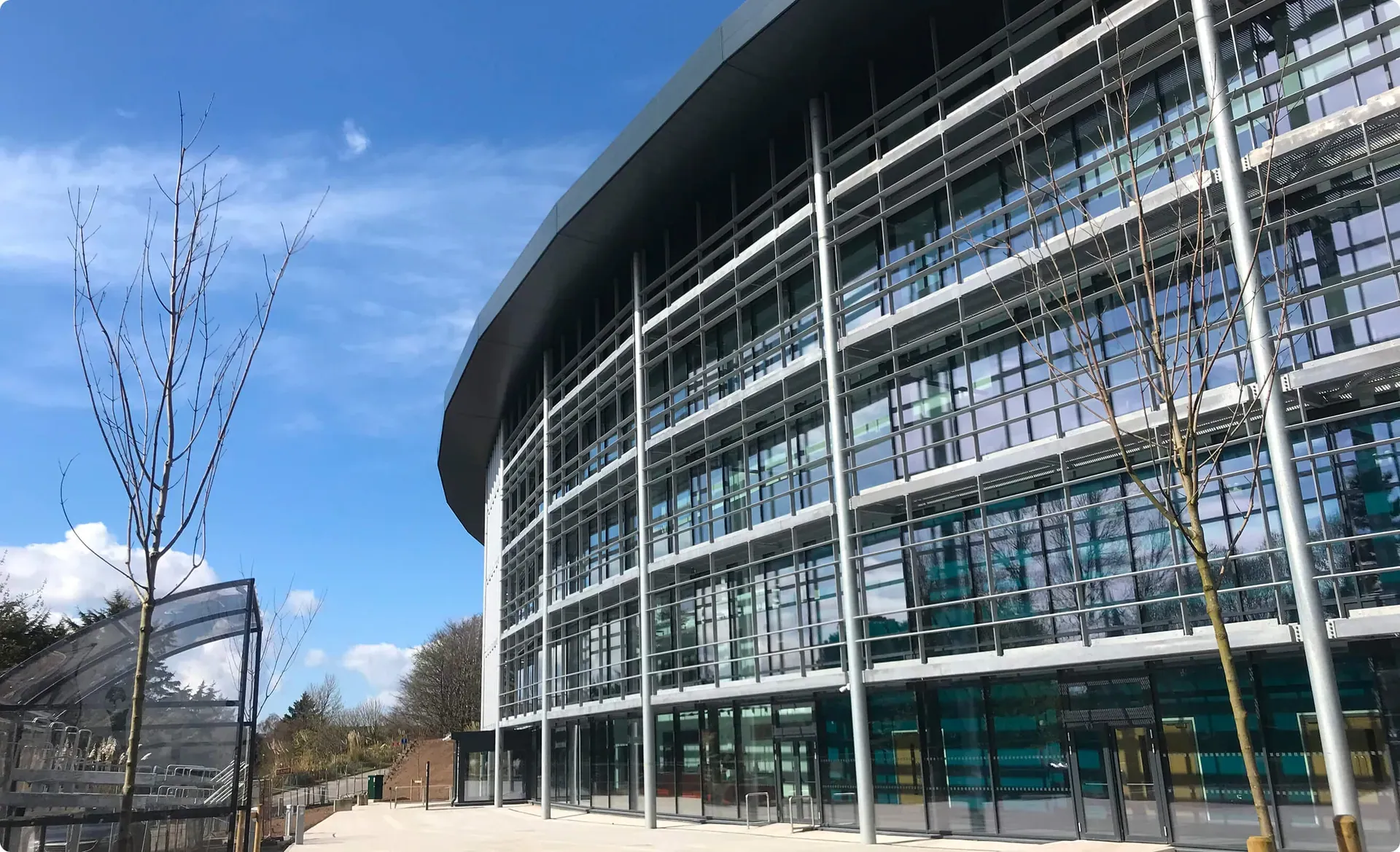
At Erne Campus in Enniskillen, the world’s first Passivhaus Premium education building, where Mosart acted as Passivhaus consultant, the ventilation commissioning records formed part of the certification evidence just like the blower-door result. At that scale, on a building like Erne, ventilation is a designed system serving hundreds of occupants, and it was treated with the same rigour as the structure.
Where Mosart fits
Mosart has taken more than 500 certified Passivhaus units through certification, reviewing the ventilation design and commissioning evidence on every one. If you are designing or checking a system, our Passivhaus certification service covers ventilation review, and the Certified Passivhaus Designer course teaches MVHR design and commissioning in full.