PHPP, the Passive House Planning Package, is the Passive House Institute’s energy model and the tool of record for Passivhaus certification. It calculates a building’s monthly energy balance, heating demand, heating load, primary energy and overheating risk, and shows whether a design meets the standard before anything is built.
Every certified Passivhaus in the world has a PHPP behind it. No PHPP, no certificate. That makes it worth understanding even if you never open the workbook yourself, because the model’s logic shapes every design decision on a Passivhaus project.
What does PHPP check?
PHPP assembles the building from first principles: the geometry of the envelope, the U-value of every element, every window and its orientation, the thermal bridges at every junction, the airtightness of the envelope, the ventilation system and its heat-recovery efficiency, internal heat gains and the local climate. From those inputs it calculates a monthly energy balance, heat losses against heat gains, month by month through the year.
The output is then tested against the certification criteria. For Passivhaus Classic, the limits are:
| Criterion | Passivhaus Classic limit |
|---|---|
| Space-heating demand | ≤15 kWh/m²a (or heating load ≤10 W/m²) |
| Airtightness | ≤0.6 ACH at 50 Pa, blower-door tested to EN ISO 9972 |
| Primary energy renewable (PER) | ≤60 kWh/m²a |
| Overheating | ≤10% of hours above 25°C |
The same model handles the other classes. Passivhaus Plus adds on-site renewable generation of at least 60 kWh/m²a with a tighter PER limit of 45, and Premium pushes generation to at least 120 with PER down to 30. For retrofit, EnerPHit relaxes the heating demand limit to 25 kWh/m²a, or offers a component-based route, with airtightness at 1.0 ACH. Different thresholds, same engine.
How is PHPP different from a compliance tool?
The two kinds of model answer different questions. A compliance calculator, such as the tools used to demonstrate Part L compliance, answers a regulatory question: does this building satisfy the minimum the law requires, under the conventions and default assumptions the methodology prescribes? The output is a pass and a rating.
PHPP answers a physical question: how much energy will this building actually need? It was built and refined against measured data from completed buildings, and its purpose is prediction, not demonstration. That difference shows up in the detail. PHPP demands real declared values for materials, calculated thermal bridges rather than default allowances, the PHI-certified heat-recovery efficiency of the actual ventilation unit (75% or better for a certified Passivhaus) and a tested airtightness result rather than an assumed one.
The consequence is well known to anyone who has run both models on the same building: a compliance result tells you about the certificate, a PHPP result tells you about the heating bill. Buildings designed in PHPP tend to perform in use the way the model said they would, which is precisely the property that compliance methodologies struggle to deliver.
What is treated floor area and why does it matter?
Every headline figure in PHPP is expressed per square metre per year: 15 kWh/m²a, 60 kWh/m²a and so on. The square metres in question are the treated floor area, or TFA, and the definition is strict. TFA is the usable floor area inside the thermal envelope, measured to PHI rules, and it is deliberately more conservative than the gross areas used elsewhere in practice.
This matters because TFA is the denominator behind every criterion. Overstate it and a failing building appears to pass. Understate it and a passing building appears to fail. Certifiers check TFA carefully for exactly this reason, and design teams should measure it the same way from the start rather than discovering a discrepancy at the design-stage review. Our treated floor area tool walks through the measurement rules.
When should PHPP modelling start?
At feasibility, not at Stage 4. The single most expensive mistake on a Passivhaus project is treating PHPP as a back-end verification exercise, run once the drawings are finished to confirm what has already been decided. By then the form, orientation, glazing ratios and structural strategy are fixed, and those are the variables that decide whether the 15 kWh/m²a target is comfortable or impossible.
Used properly, PHPP is a design tool that runs through the whole project:
- At feasibility, a coarse model tests the form factor, orientation and glazing strategy, and establishes whether the brief and the standard are compatible on this site.
- Through design development, the model is refined as build-ups, windows, junction details and services are specified, with each decision tested for its effect on the energy balance.
- At design-stage certification review, the completed PHPP is checked by the certifier against the criteria, catching errors while they are still cheap to fix.
- During construction and at completion, the model is updated with as-built information and the measured blower-door result, so the certificate reflects the building that was actually delivered.
Worked this way, the model costs the project nothing in time. It runs in parallel with the design programme and pays for itself in avoided redesign.
Does PHPP scale?
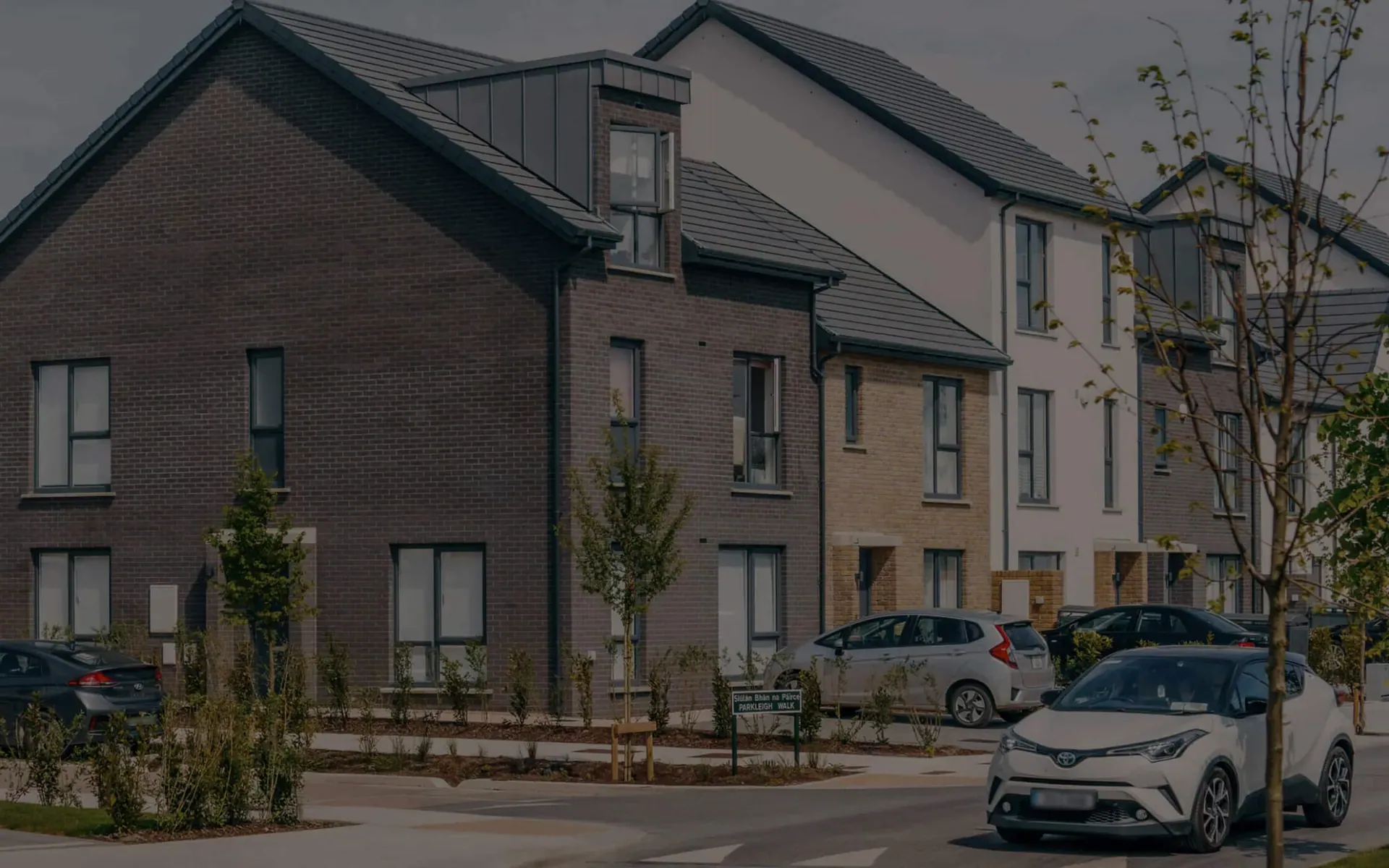
Yes. The same workbook that models a single house underpins schemes of thousands of homes. At Seven Mills in Dublin, the 5,500-home new town being delivered by Cairn Homes with Mosart as certifier, PHPP models sit behind the certification of every unit type. At that scale the discipline of the monthly balance becomes a production tool: get the repeated unit types right in the model and the whole scheme follows.
Where Mosart fits
The earlier the model starts, the more it earns, which is why our PHPP energy modelling service begins with a coarse feasibility model and runs through to the certification-ready workbook. If you would rather build the skill in-house, the Certified Passivhaus Designer course teaches PHPP as its core. The treated floor area tool is a good first step into the model’s logic.