Honestly: a badly designed one can. The Passivhaus standard caps overheating at no more than 10% of hours above 25°C, so a certified building has been checked against the risk before it is built. But high insulation holds heat in summer as well as winter, and any well-insulated building will overheat if glazing, shading and ventilation are not designed together.
Is overheating a Passivhaus defect?
No. It is a design risk in every highly insulated building, whatever the label on it. Insulation slows heat flow in both directions: it keeps winter heat in, and it keeps a summer heat load in too, once that load has entered through the glazing or been generated inside by people and equipment.
What sets Passivhaus apart is that it is one of the few standards that forces the question. The overheating criterion, no more than 10% of annual hours over 25°C, sits alongside heating demand and airtightness as part of the pass-fail assessment. A building cannot be certified on its winter performance alone. Plenty of buildings outside the standard receive no equivalent check at all, which is why overheating complaints are not a Passivhaus story. They are a design-quality story.
What actually drives overheating?
A small set of design decisions does most of the damage, and all of them are visible at concept stage:
- Glazing ratio. The single biggest lever. Solar gain scales with glass area, and over-glazed facades load the building faster than ventilation can unload it.
- Orientation. The same glazing area behaves very differently facing different directions, and low sun angles are the hardest to shade.
- Shading. External, fixed or movable, designed with the facade rather than bolted on afterwards.
- Ventilation strategy. Cross-ventilation can move far more air than single-sided openings. Single-aspect plans start the summer at a disadvantage.
- Openable area. What the occupant can actually open in practice, after restrictors, security and noise are accounted for, not what the drawing implies.
- Night purge. The ability to flush the day’s heat out overnight, which depends on openings that can safely be left open.
If a scheme gets these six right, the overheating calculation tends to confirm it. If it gets them wrong, no calculation will rescue it.
How do drivers map to mitigations?
| Driver | Mitigation |
|---|---|
| High glazing ratio | Size glass for daylight and views, not as cladding |
| Difficult orientation | Redistribute glazing; shade the exposed facades hardest |
| No shading | External shading designed with the facade |
| Single-sided ventilation | Plan for cross-ventilation wherever the layout allows |
| Limited openable area | Specify openings that work with restrictors and security in place |
| No night purge | Provide secure openings that can stay open overnight |
How do PHPP, TM59 and Part O treat it?
PHPP, the Passivhaus energy model, screens overheating as an annual frequency: the share of hours the building spends above 25°C, which must not exceed 10%. It is fast, runs from the same model as the heating calculation, and catches risky designs early. Our PHPP energy modelling service treats the summer case as a first-class output.
CIBSE TM59 is the residential overheating methodology, and Part O applies in England as the regulatory requirement. These instruments ask related but different questions of a design, so a scheme may need to satisfy more than one of them. The practical advice is the same regardless: run the screening early, when glazing ratio and orientation can still change. A two-minute pass through our overheating quick check at concept stage costs nothing and flags the schemes that need closer work.
How do you screen a scheme in five steps?
- Check the glazing ratio facade by facade. Flag any elevation where the glass is doing more than daylight requires.
- Test the orientation. Identify which facades carry the solar load and whether the plan puts vulnerable rooms behind them.
- Confirm the shading strategy. If the answer is internal blinds, the answer is incomplete.
- Classify the ventilation. Cross-ventilated or single-sided, room by room, with the openable area that survives restrictors and noise constraints.
- Interrogate the night purge. Decide what can genuinely stay open overnight, and what the building does in the weeks when nothing can.
Why is student housing the hard case?
Dense residential types concentrate every risk factor at once. Student accommodation means single-aspect rooms, high occupancy, equipment gains, and windows constrained by safety, security and street noise. Cross-ventilation is often impossible and night purge is limited, so the load that enters must be controlled at source through glazing and shading discipline.
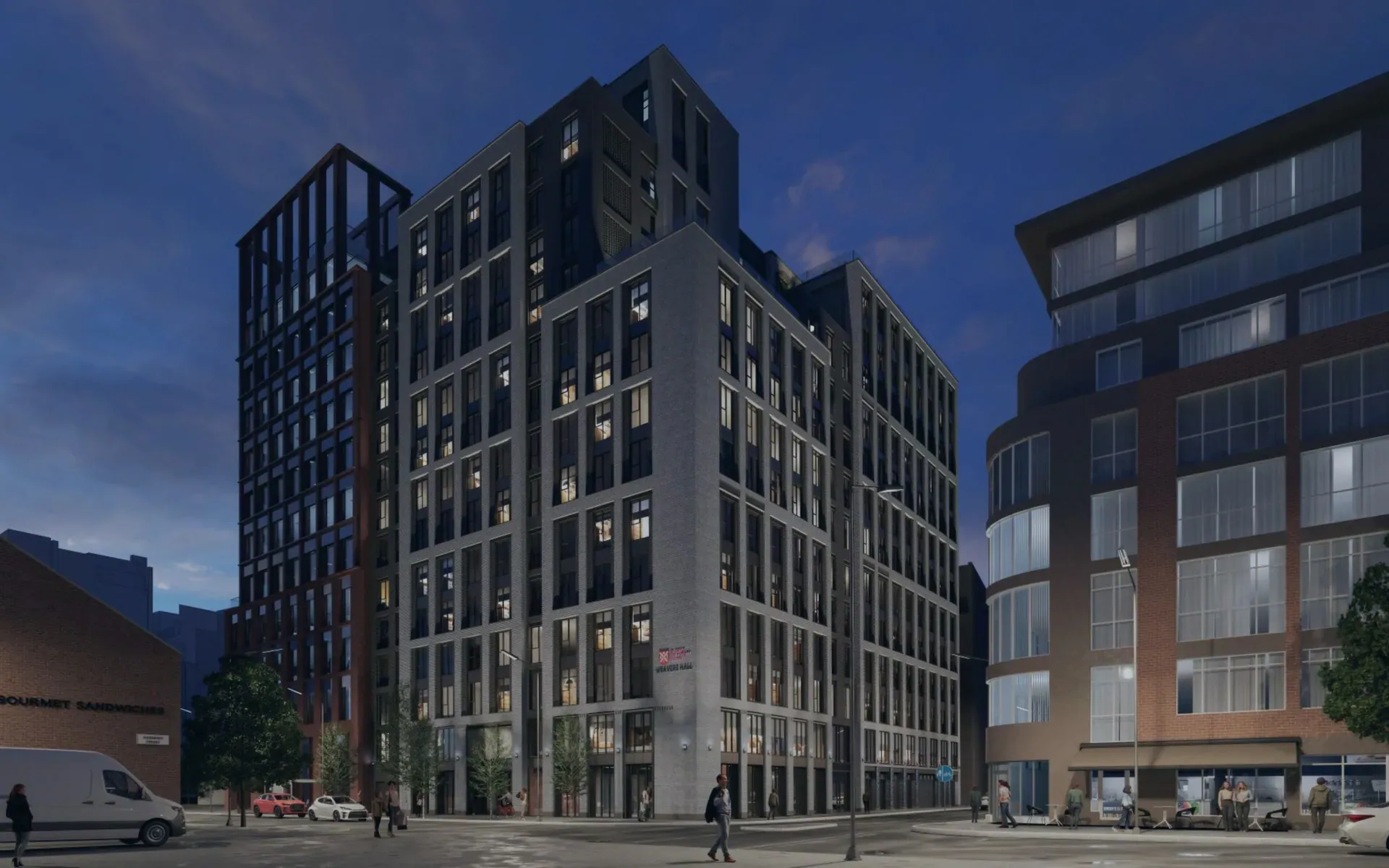
That is why overheating is a first-order design issue in this sector rather than a compliance line item. Weavers Hall in Belfast, Passivhaus student accommodation at Queen’s University, had to resolve exactly this tension: a certified low-energy building that also holds summer comfort in densely occupied single-aspect rooms. The same pressures apply across the student accommodation sector, and they reward teams who model the summer case as early as the winter one.
So what is the honest answer?
Passive houses are designed not to overheat, and certification verifies it against a hard criterion. Buildings that skip that check, whatever their insulation level, are the ones that gamble. The risk is real, the drivers are known, and every one of them is controllable at concept stage for little or no cost. Overheating in a finished building is almost always a decision that was made, unexamined, on an early drawing.
Where Mosart fits
If overheating is a decision made on an early drawing, the answer is to be in the room for the early drawings. Our PHPP energy modelling team screens the summer case from the first design iteration, and the free overheating quick check lets you test your own scheme before anyone opens a model.