Energy and ESG reporting
Disclosures built on design figures get questioned. Pulse BPM measures energy, comfort and air quality in the homes themselves, dated and exportable.
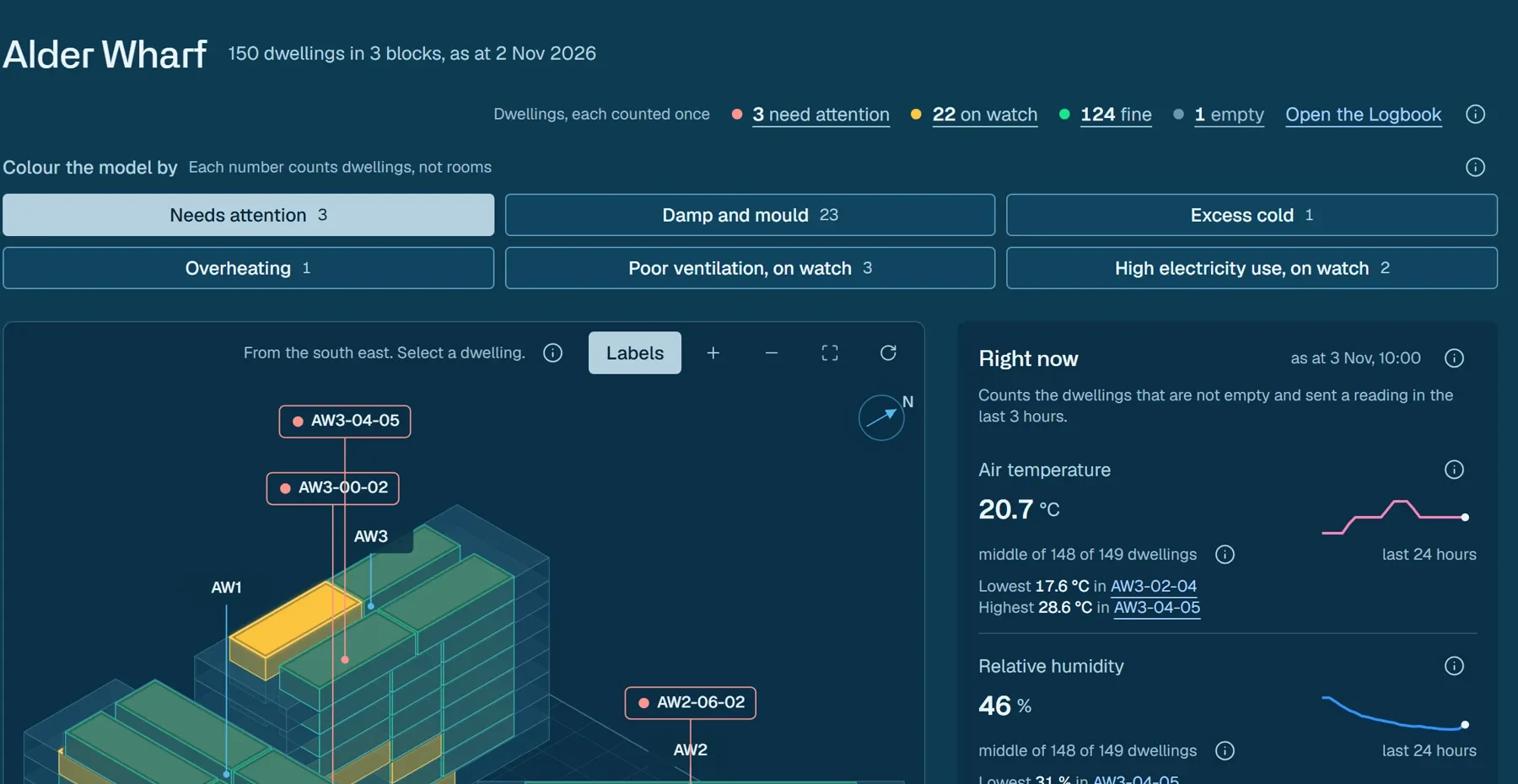
Measured figures come from meters and sensors rather than models. Pulse BPM supplies energy, comfort, air quality and damp and mould risk for each building, with the dated record behind them.
- London Plan Policy SI 2: measured energy reported once a year for five years after completion
- BREEAM: measured data can support Ene 02, Hea 02, Hea 04 and Man 05, for your Assessor to judge
- ESG: GRESB scores the coverage and quality of the data behind a portfolio’s figures
- Pulse supplies the figures. The registers and webforms stay with their owners
A year of metered energy, on a demo scheme
Energy for 150 homes by use, with the high users listed first and a CSV export.
Demo scheme. The figures are illustrative, not a client result.
What you get
Energy by building and month
Electricity from clamps and meters by building, month and use, beside temperature. Gas, heat and generation join as meters are connected.
Predicted against measured
Planning and as-built predictions held beside the measured year, with the gap shown and likely reasons marked.
Exports by question
The year’s figures laid out by framework question, with the monthly readings behind each total and a method note.
Be Seen, BREEAM and ESG
- London Plan Be Seen
- Major developments report predicted energy at planning, updated predictions as built and measured energy for five years after completion. The Greater London Authority takes it through its own webform. Your legal agreement sets what is owed.
- BREEAM
- Pulse does not award credits. It gives measured energy, CO2 and comfort data that can support Ene 02, Hea 02, Hea 04 and Man 05. Whether a measurement meets a criterion is for your Assessor, under the manual you registered under.
- GRESB and SRS
- GRESB scores how much of a portfolio is covered by data and how good it is. The Sustainability Reporting Standard for social housing asks about energy, net zero and damp and mould. Measured readings are a source for both.
- CSRD
- The 2026 Omnibus changes are reported to have narrowed the EU duty to larger companies, and national rules are still settling. Where it applies, building energy and climate figures are part of it.
Related: post occupancy evaluation, Awaab’s Law.
Who is behind Pulse
Mosart has worked on building performance since 1993 and has been the Passivhaus designer or certifier on around 10,000 homes and 7,500 student bed spaces. We are an RIAI registered practice with seven Passivhaus certifiers accredited by the Passive House Institute. The people who set up Pulse are the people who certify the buildings it watches.

Questions about energy and ESG data
- What is Be Seen energy monitoring?
- Be Seen is the fourth step of the London Plan energy hierarchy, in Policy SI 2. It asks developers of major schemes to report predicted energy at planning stage, updated predictions and the metering plan when built, and measured energy in use, so the Mayor can see whether buildings perform as promised.
- Is Pulse the Be Seen portal?
- No. The Greater London Authority runs its own reporting webform. Pulse BPM supplies the metered figures that go into it, laid out to match, and keeps the monthly and annual record behind each submission. Mosart’s engineers can check the metering plan against the as-built building and prepare each year’s submission for you to send.
- Does Pulse earn BREEAM credits?
- No. Credits are awarded by a BREEAM Assessor against the scheme manual. Pulse BPM supplies measured data that can support the evidence for energy monitoring, indoor air quality, thermal comfort and aftercare, and Mosart’s engineers can help you assemble it for your Assessor.
- Does Pulse produce an ESG report?
- Pulse BPM produces the measured figures and the record behind them. The report itself, with your narrative, targets and governance, stays yours. The ESG export is organised by framework question so the numbers can be dropped in and traced back.
- Does CSRD apply to us?
- Under the 2026 Omnibus changes, the EU reporting duty is reported to cover only larger companies, with thresholds around 1,000 employees and EUR 450m turnover, and national rules are still settling. Check with your adviser. Suppliers and lenders may still ask for the data.
Get a quote
Send us the energy strategy and the metering plan, or tell us which framework you report under. We will say what is covered, what is missing and which figures can be measured now.
Or call +353 404 25777. Ask for the Pulse team.